NavList:
A Community Devoted to the Preservation and Practice of Celestial Navigation and Other Methods of Traditional Wayfinding



From: Frank Reed
Date: 2025 Oct 2, 08:07 -0700
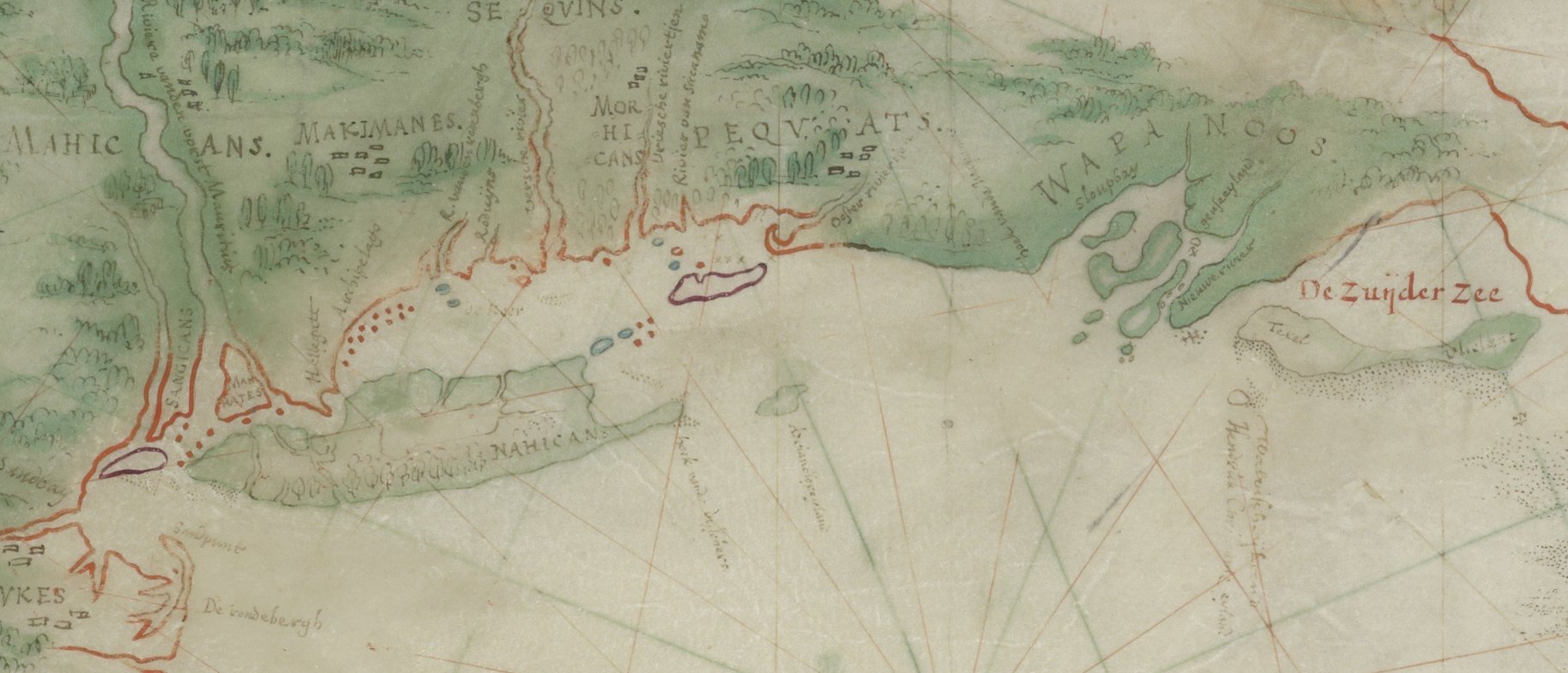
A friend of mine has been invited to consult on a project regarding the survey of the Connecticut and Rhode Island coasts that led to the map published by Dutch trader/explorer Adriaen Block and his financial backers in 1614. You can read a bit about Block on Wikipedia here. Be forewarned that the article is amateurish and has some style features that --to me at least-- look as if it's burdened by prose and editing from the early days of Wikipedia. But linked within the Wikipedia article is a nice copy of the sketch map that was published.
The Block map includes some good detail. For those of you who know Fishers Island and Fishers Island Sound, southeast of New London, Connecticut and south of Mystic (and modern Mystic Seaport Museum), you'll notice that several small islands are placed quite close to their modern locations. These areas seem to have been subject of at least some careful "sketching". In contrast, points further up the coast towards the east, especially past Narragansett Bay, where I live today, are possibly copied from earlier maps. For example, on the map the area labeled as Zuiderzee and with islands south of it named as Texel and Vlieland (named by analogy with the islands north of the Zuiderzee in the Netherlands) is so crude that it's not at all clear what islands these are supposed to be. Probably Texel should be matched to modern Martha's Vineyard and Vlieland would be Nantucket. Or they could be intended to correspond to a couple of islands in the Elizabeth Chain, in which case this Texel would correspond to Cuttyhunk. But this may be undecidable.
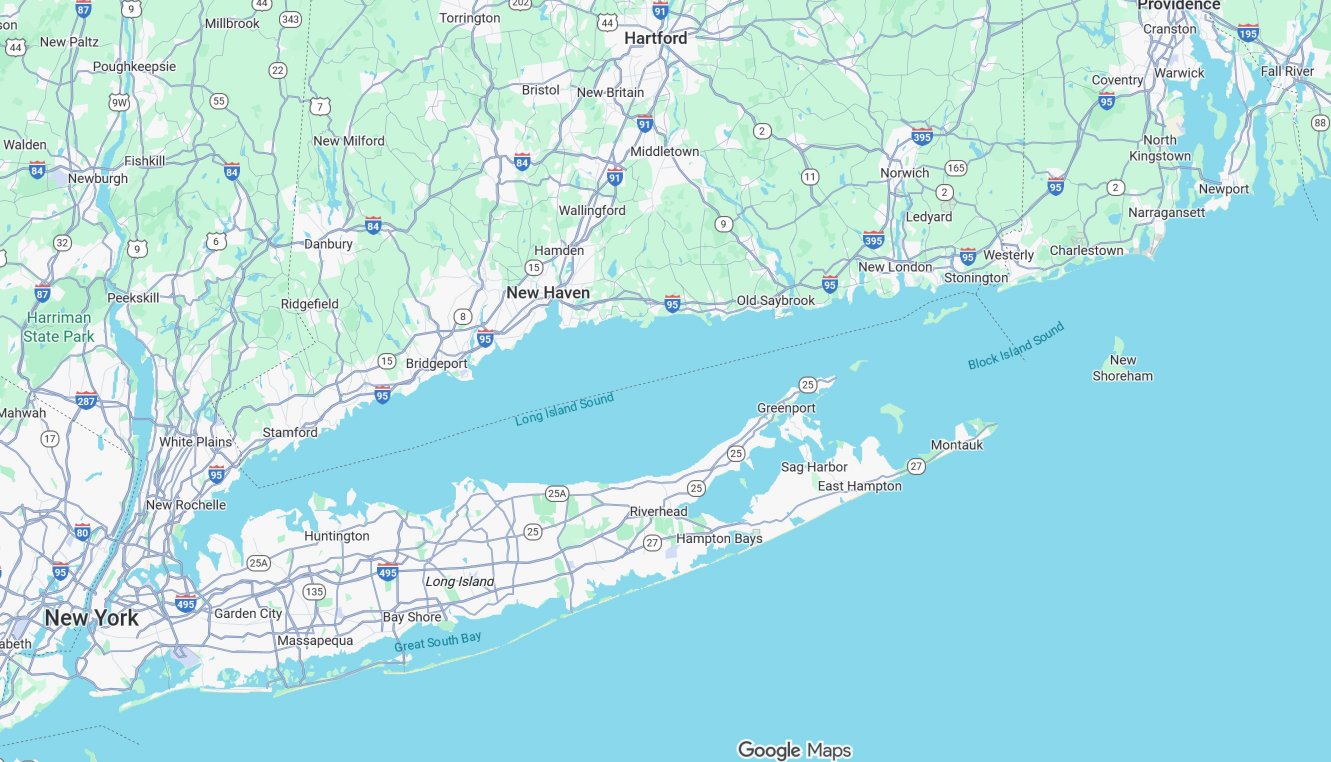
Please feel free to suggest any accuracy and inaccuracy, especially in the Connecticut, Rhode Island areas and also the modern New York City and Long Island areas.
Now to the big question for the NavList community: coastal surveying and mapmaking are undergoing a revolution in this period. Some maps are rough sketches based on a little coastal cruising while others are detailed charts suggesting more modern surveying techniques. Can anyone suggest what methods and tools would have been applied by a Dutch team in 1613? And what would have been the range of options available? What were the simple techniques of coastal mapmaking that Block certainly could have used? And what were the more sophisticated methods that may have been available to Dutch cartographers in home waters and around the North Sea, but which would possibly (?) have been beyond Block's abilities at this time? Does anyone know of any modern scholarly surveys of the available methods, either specifically Dutch or more generally (northwest) European at the beginning of the 17th century? Did Edward Wright discuss coastal surveying?
Finally, the island called "Block Island" today is generally identified with the island drawn on this chart, which may not be correct. How quickly was his name attached to today's Block Island? Certainly by the time of the Pequot War, 25 years later, some of the events leading to the war supposedly took place on Block Island. Which "Block Island" was it?
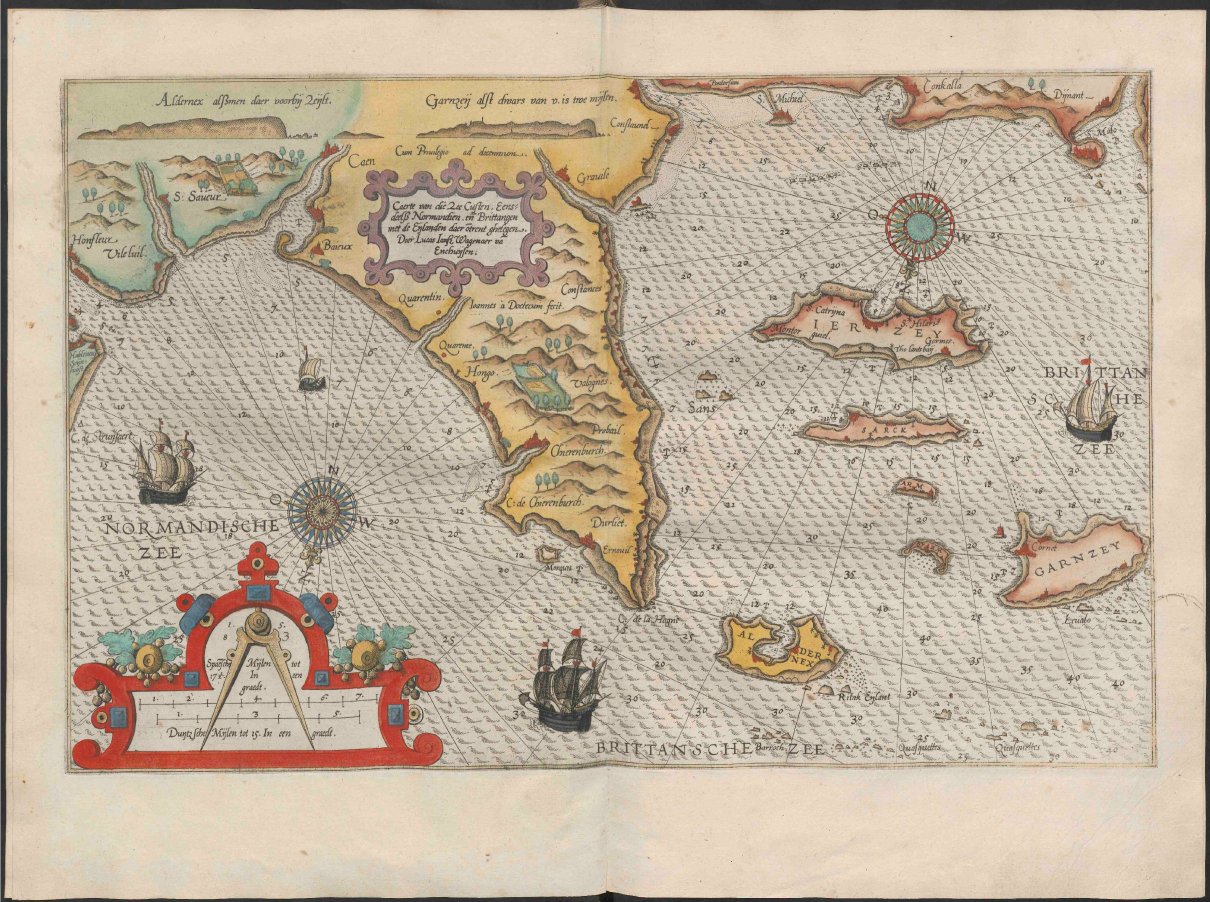
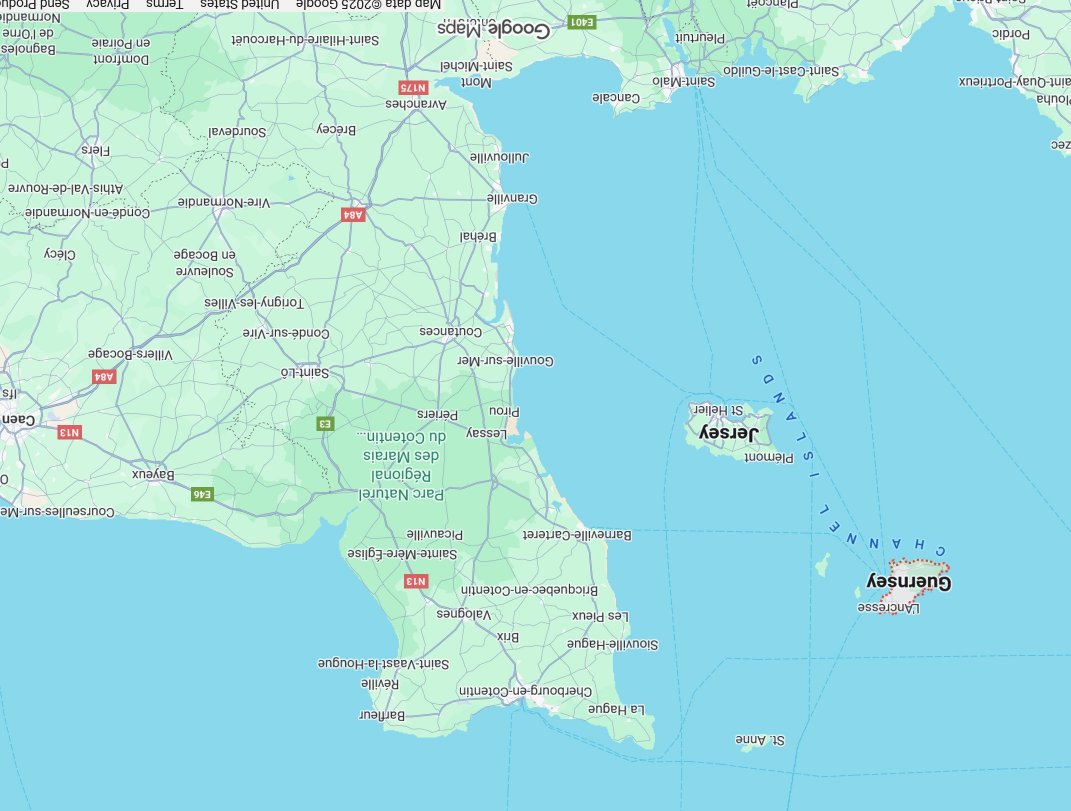
I'm attaching two clips of maps, plus modern Google Maps images for context. One of the period maps is just a screen capture from the Wikimedia version of the Block map. The other is from that Dutch almanac and atlas c.1583 linked in a NavList message a year or two ago (someone look up the date?). The detail of the Channel Islands is, of course, much higher than Block's map, and the quality is intentionally "artistic". Both charts share an interesting scale problem. The Channel Islands are enlarged substantially, and likewise Fishers Island on Block's map is magnified. It's an intriguing problem...
Frank Reed
Clockwork Mapping / ReedNavigation.com
Conanicut Island USA