NavList:
A Community Devoted to the Preservation and Practice of Celestial Navigation and Other Methods of Traditional Wayfinding



From: Jeremy C
Date: 2025 May 18, 10:52 -0700
From the video and other data, I've seen, the most likely scenario here is that the vessel's Main Engine was stuck in reverse and the undocking tugboat (conventional style) was not tied up to the barque, or had already let go, and was unable to effectively assist before the contact..
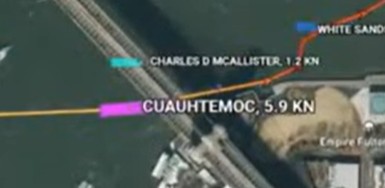
Published wind and tidal current data show about a 1.5 knot flood current and about 10 knots of wind adding to this effect. The ship was moving astern at 2.2 knots in the middle of the river but accelerated to 5.9 knots according to MarineTraffic AIS data at the time of the allision (see photo) and even after she was demasted and struck the park. One video also showed astern wake along the quarters of the vessel as it passed under the bridge. There was no evidence that any attempt was made to let go the anchor until the vessel was upstream of the Brookyln Bridge.
The only hope would have been for the tug to pin the ship along the pier downstream of the bridge but given her speed and a lack of tugs lines, I doubt this would have worked, even if the tug was able to get alongside. Most tugs can only go 7-8 knots ahead, so being able to overtake a vessel at 6 knots and then effectively come to a 90 alongside is next to impossible for a conventional tugboat.
Since this is a foreign naval vessel, I am unsure how many details we will get out of this incident, but it goes to show that there isn't much margin of error when maneuvering large vessels in tidal streams.
In my opinion a few things should or could have been done differently, with added cost/expense of course.
1) 2 tugboats. The vessel only has a 1,200 HP engine, and working a barque in that current is hazardous. The tugs should have remained tied to the vessel until positive confirmation of an ahead bell to maneuver the ship down the river.
2) Slack tide. This operation should have been conducted at, or near slack tide to minimize the effects of current during the undocking.
3) Anchors out of the hawse and ready to let go. This should be standard operating procedure. It probably wouldn't have saved them in this situation, but it would mitigate speed which minimizes damage
4) No one aloft: Given the close proximity of a low clearance bridge upstream during a flood tide this showboating display adds unnecessary risk to the operation.
5) Testing the engine ahead an astern at the dock. I don't know if this was part of their procedure, but if it wasn't done, it should have been.
This is just my outsider opinion based on what I have seen so far. This may change as more information is released.