NavList:
A Community Devoted to the Preservation and Practice of Celestial Navigation and Other Methods of Traditional Wayfinding



From: Frank Reed
Date: 2025 May 24, 08:24 -0700
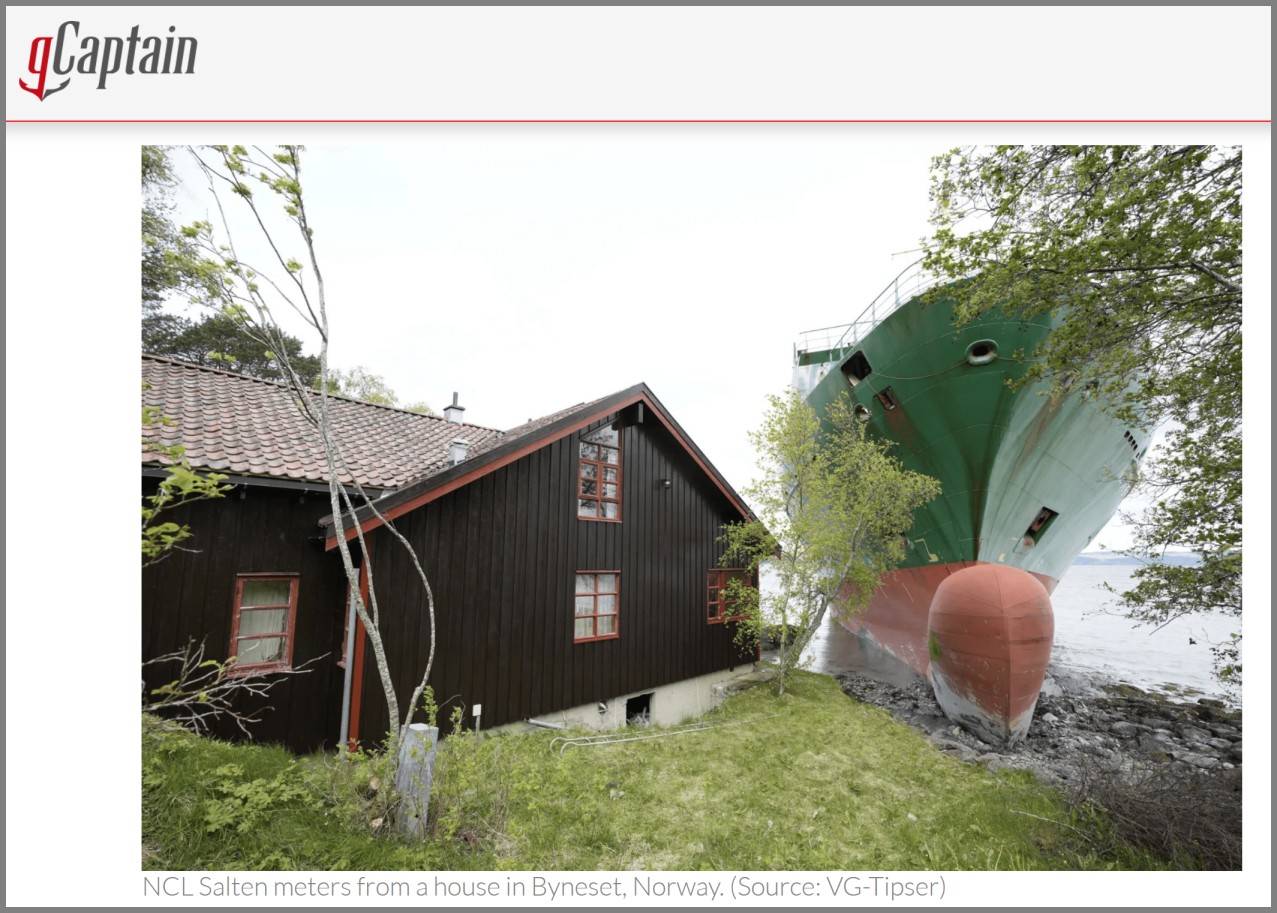
No injuries among the crew. No obvious damage to the ship. The helmsman apparently dozed off. And the guy living in the little house slept right through it. To me that implies a moderate deceleration. I'll propose: <0.25g. At that level of deceleration, crew members would not usually fall over or get their heads banged against bulkheads.
The ship was supposedly moving at 16 knots, but I'll bump that up to 19 for "round numbers". A speed of 19 knots is about 9.8m/s (or 32 feet/s), so "1g" is a change in speed of 19 knots per second. If the ship decelerated in roughly four seconds (or more), then the deceleration would have been less than about a quarter of 1g --my arbitrary level, as "proposed" above. This further implies a stopping distance of about 64 feet. So if the bottom near the grounding point is hard (but not too hard) and shallows up from depth near the approximate draft of the vessel when underway to maybe a foot or two above water in somewhere around 50-75 feet, then the ship could ride up on shore quietly, barely disturbing the slumber of the man at the helm, and without significant damage. But it sure does get you in the news if there are cameras around! And "these days" there are always cameras around, aren't there?
I recall seeing a fairly similar photo of a soft, but "photogenic" (!), grounding of a large cargo vessel in a twisty, craggy Norwegian fjord just a few years ago. Seems like a job for robots to me...
Frank Reed