NavList:
A Community Devoted to the Preservation and Practice of Celestial Navigation and Other Methods of Traditional Wayfinding



From: Frank Reed
Date: 2025 Dec 23, 13:03 -0800
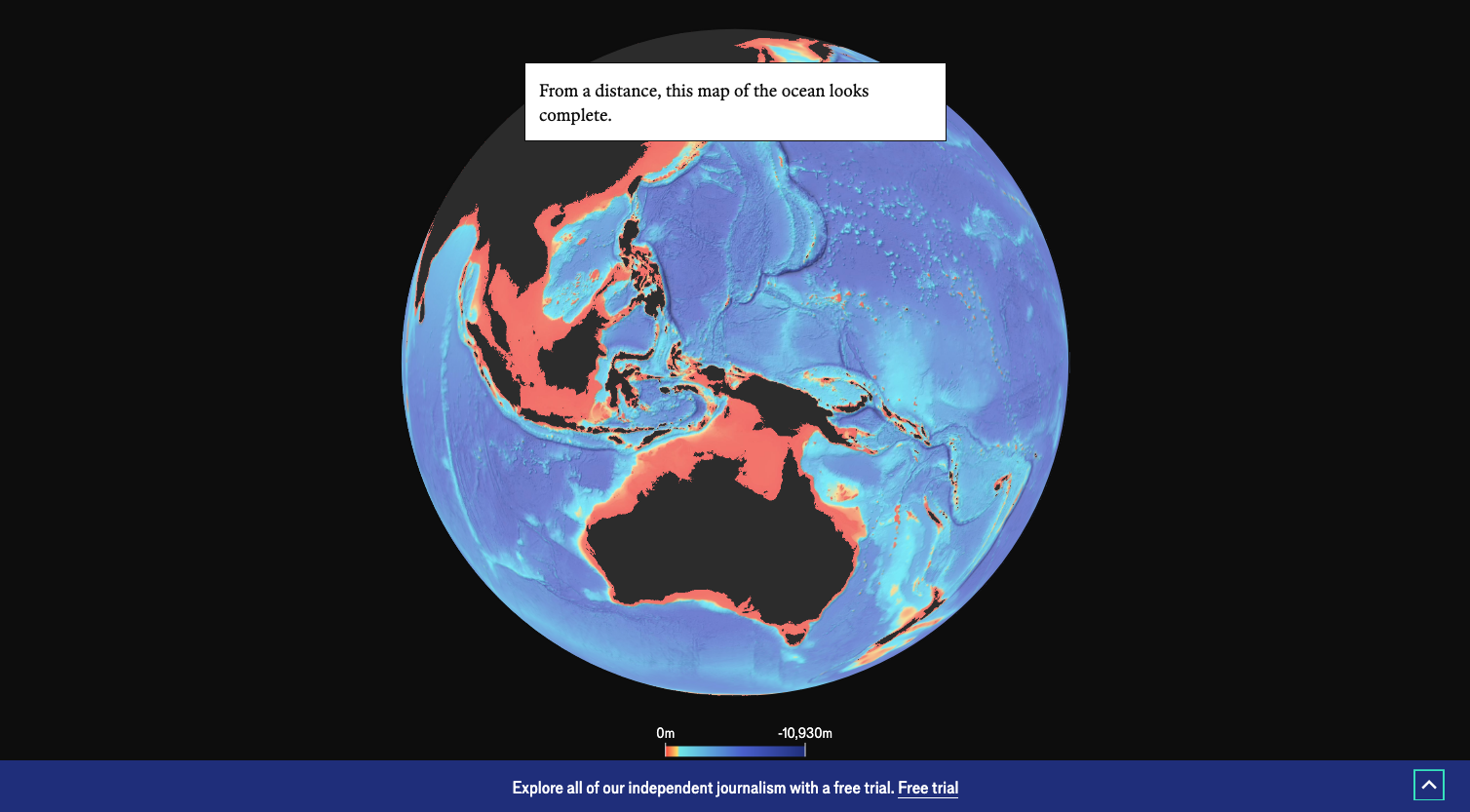
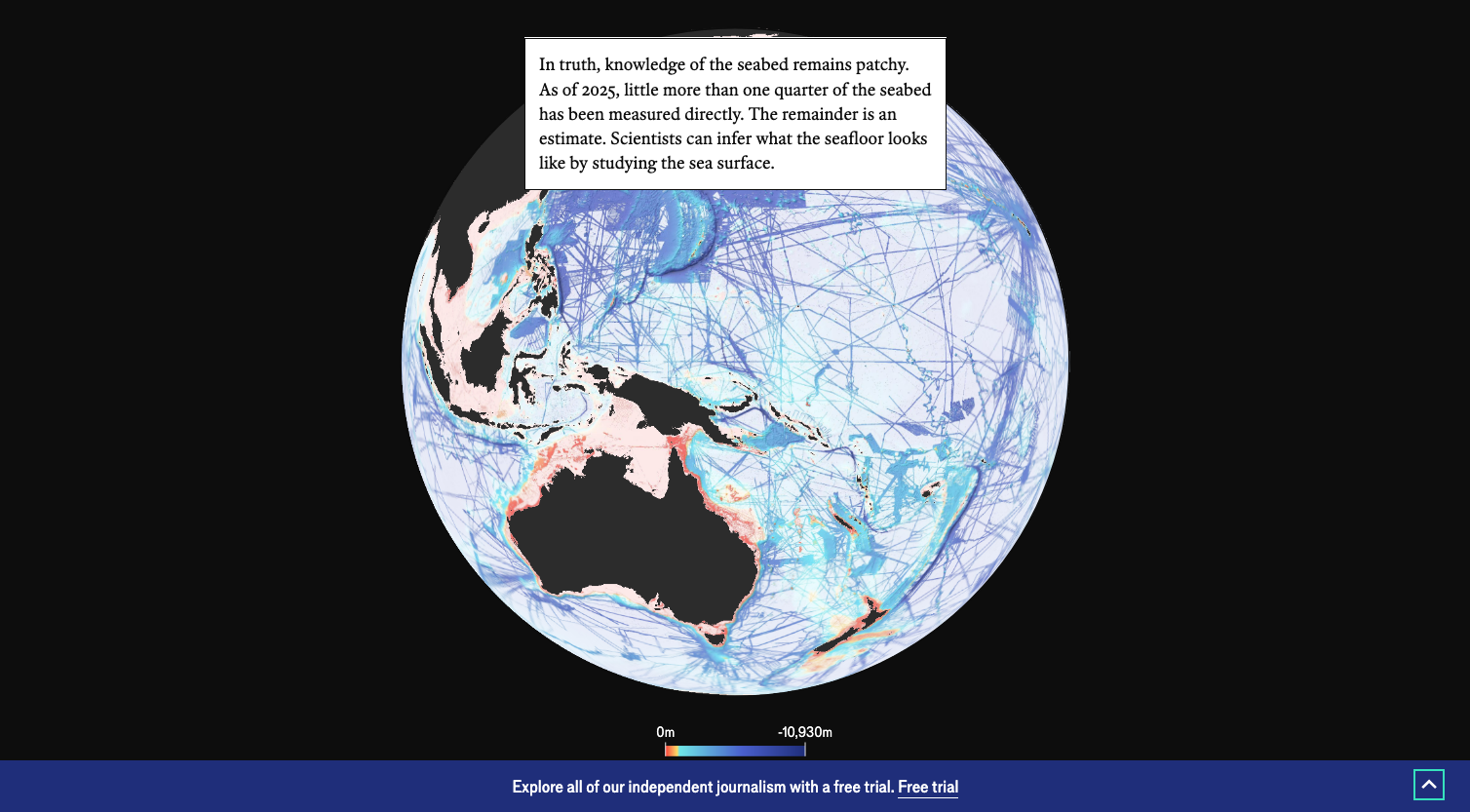
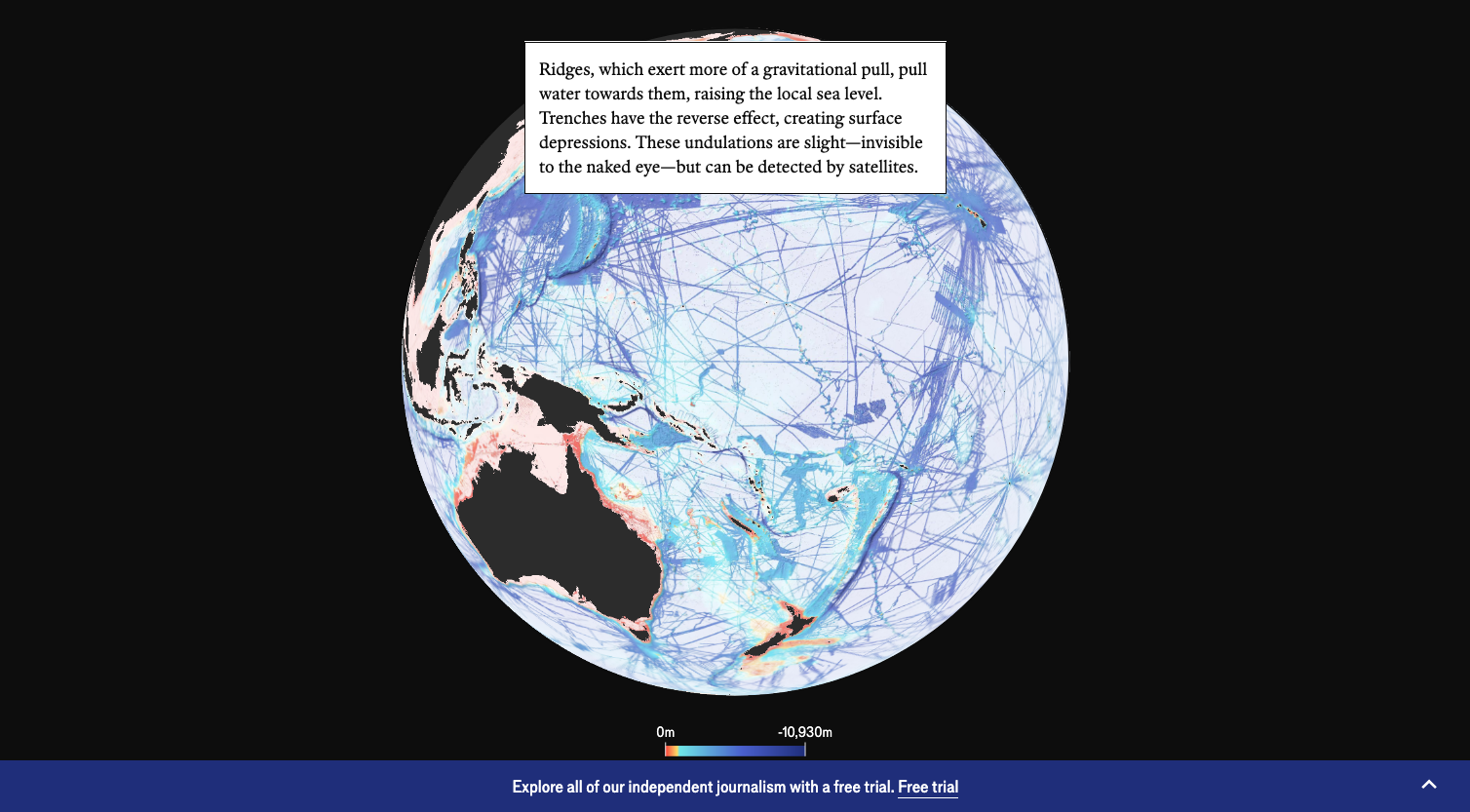
On the topic of the shift in the zenith caused by gravitational deflection, there's an article in The Economist this week discussing the illusion of the deep ocean in Google Maps and other resources. Those maps create the completely misleading impression that the deep ocean has been mapped with some reasonable level of fidelity. In fact, however, the majority of the ocean floor is inferred from its gravitational effects, and it is at best a rough approximation of what's down there. An undersea mountain typically creates a lump in the ocean's surface thanks to the mountain's own gravitational pull. Ocean trenches create depressions in the ocean's surface. The catch is that this is only approximately true, and sometimes mountains surprise us!
The dimples and hills in the ocean's surface can be detected by orbiting satellites. The physical height can be measured. For us down here, on land or on the oceans, these small variations are completely invisible by direct observation, but they do have an interesting impact. They shift the zenith, just like the case with those astronomical observations in the 19th century near the Himalayas. For navigators, those undersea mountains and valleys move the zenith, and —therefore, necessarily— throw off our celestial navigation fixes. In the vast majority of locations on the globe, where the geology is docile, ancient, and subdued, the deflection is very small, less than a couple of seconds of arc, and celestial positon fixes are shifted by a few hundred feet. Nothing to worry about. But near active, young geology, the deflections can amount to a mile or more. If a mile is no problem, then this doesn't matter either. But if you work your celestial fixes to the nearest tenth of a minute of arc, even occasionally, then the gravitational deflection of the vertical, DOV, does matter. That's why it's included in my GPS AntiSpoof apps as a standard correction.
The article in The Economist that I mentioned above is excellent prose, as usual for The Economist, but it's also a wortk of art in a small way. Read it here: The Quest to Chart the Sea. It's an example of the technique where scrolling through an article updates an animation, known by the cloying name scrollytelling (here's the NYT article Snow Fall that started it all with an avalanche over a decade ago). Although The Economist article is behind a paywall, you get one free article a month (per browser!), so you should be able to read it. There are several maritime connections discussed, as you can imagine (but no celestial navigation). I'm including a few images from their scrollytelling...
Frank Reed