NavList:
A Community Devoted to the Preservation and Practice of Celestial Navigation and Other Methods of Traditional Wayfinding



From: Robin Stuart
Date: 2025 Jun 19, 07:24 -0700
Over the weekend I rectified a long standing omission and visited the Peabody Essex Museum in Salem, Massachusetts. They proudly laud their cultural and artistic collections so I was surprised and pleased to find that the gallery labelled "Maritime Art" also housed some pretty spectacular nautical artifacts.
Some of the collection comes from the from the East India Marine Society founded in 1799 and "composed of persons who have actually navigated the seas beyond the Cape of Good Hope or Cape Horn, as masters or supercargoes of vessels belonging to Salem." The members were required to donate "curiosities" collected on their voyages which explains the eclectic mix on display around the museum.
Along with an extensive collection of paintings and models the "Maritime Art" gallery also holds a spectacular collection of nautical items.
Some example are:
> The captain's desk recovered from the Mary Celeste containing a letter to his son
> Lifesize portrait by Charles Osgood of Nathaniel Bowditch commissioned by the society in 1835
> 1804 model of the ship Friendship that was used for the full-sized reconstruction that is normally moored at Salem (but is not there at present)
> Several log books including that of the Friendship
> A 1 ton model of the QEII from the Cunard Line offices in New York.
Elsewhere there is also a collection of well-preserved ship's figure heads.
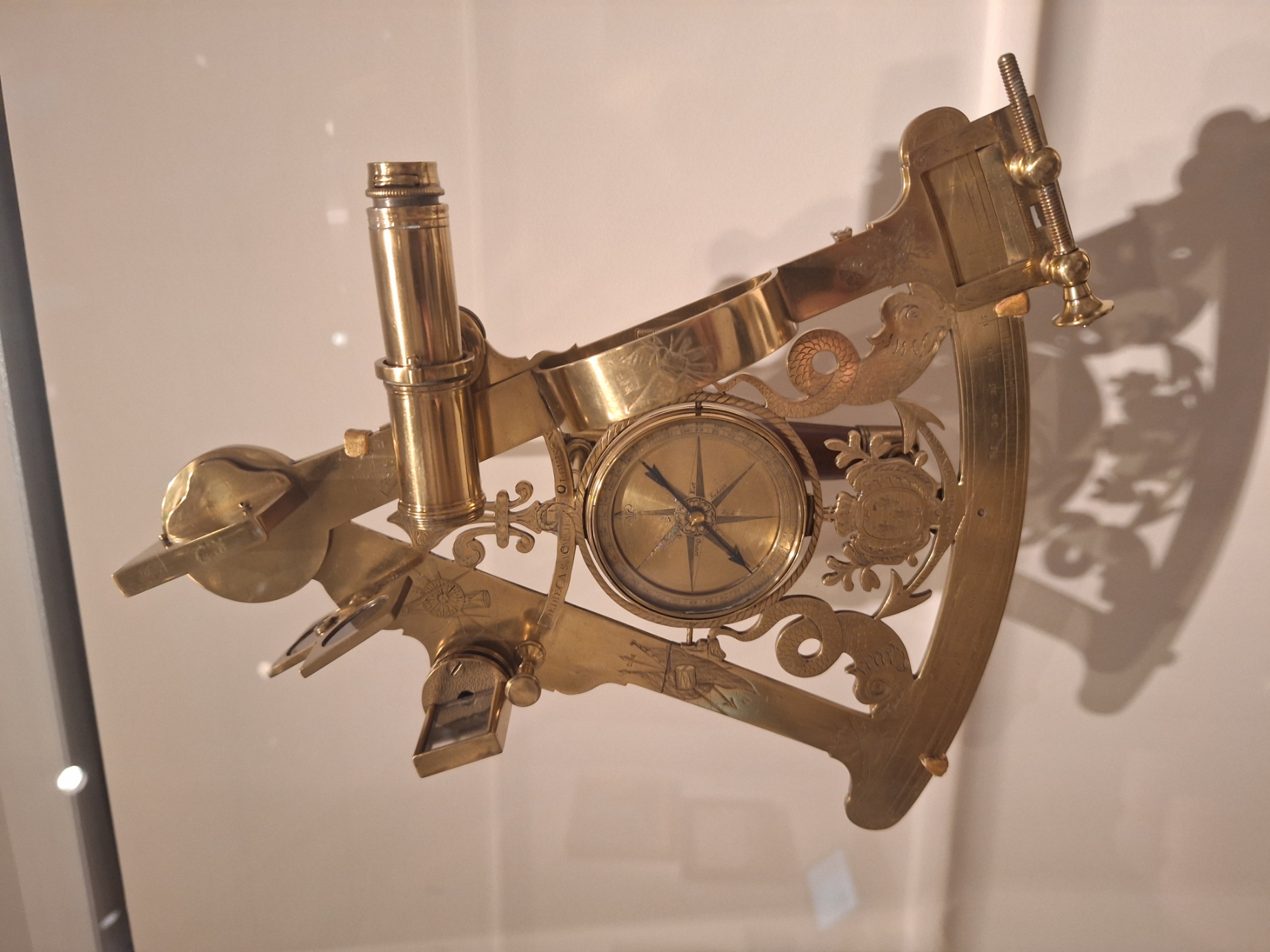
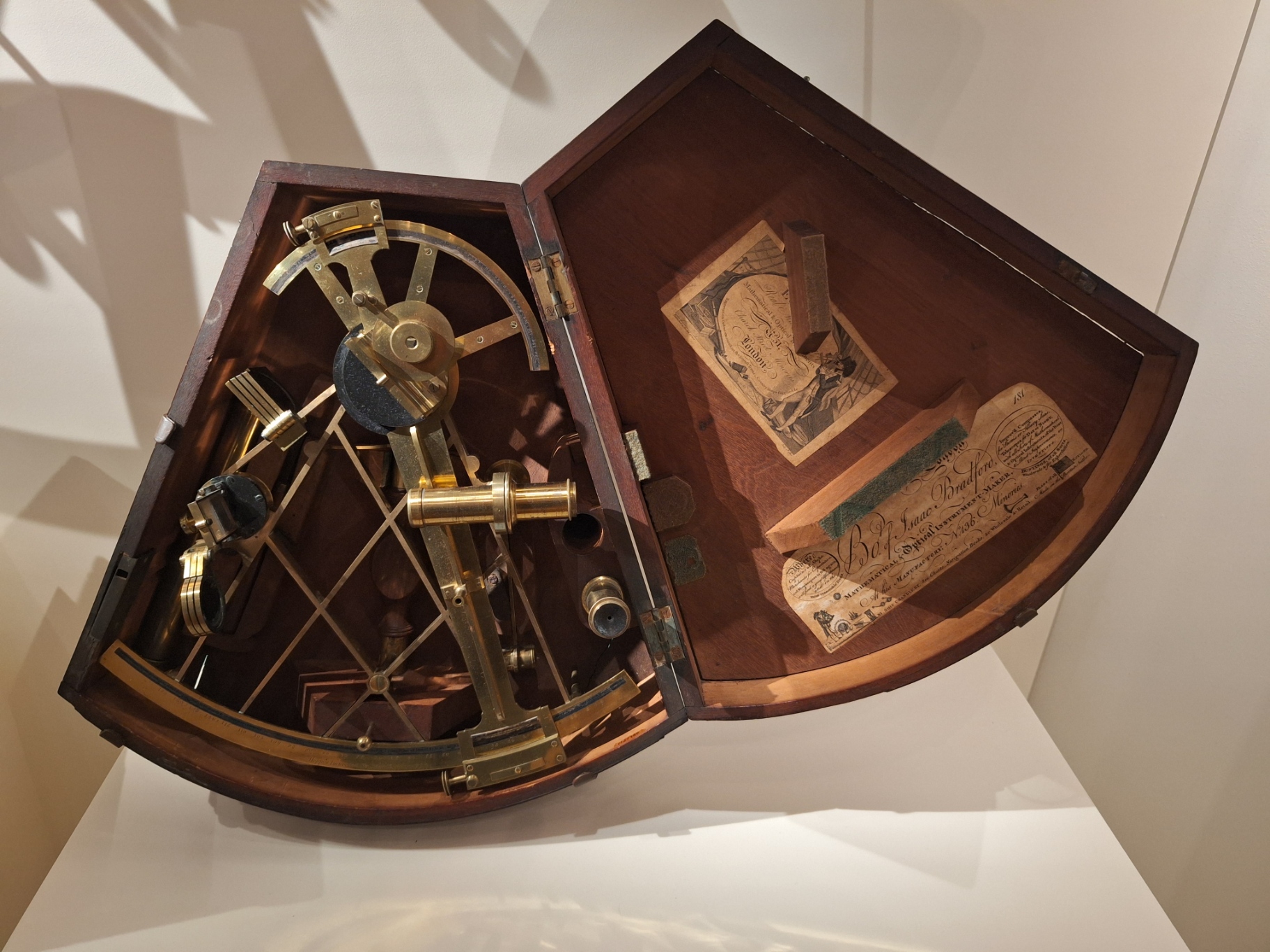
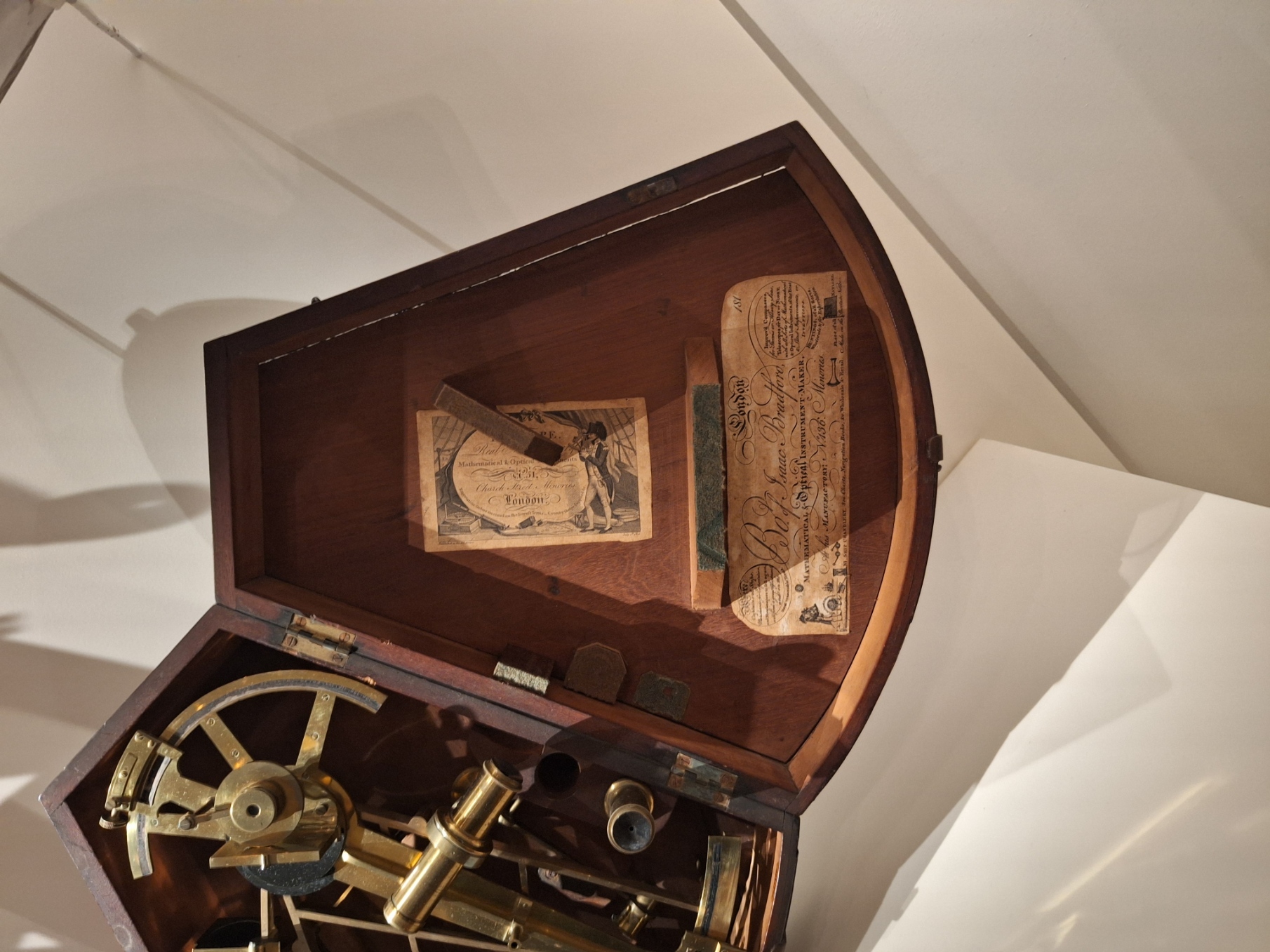
I'm attaching images of a couple of sextants. The first is a royal presentation octant dedicated to Louis XVI from about 1786 by Jean Baptiste Magnié. The second is Ebenezer Hoppé's improved sextant. Apparently the purpose of the small upper scale is to adjust the angle of the index mirror to increase the accessible range of the sextant.
Anyway the lesson is that the Peabody Essex Museum (PEM) is well worth a visit but they would do well to place greater emphasis on their maritime collection.
Robin Stuart