NavList:
A Community Devoted to the Preservation and Practice of Celestial Navigation and Other Methods of Traditional Wayfinding



From: Frank Reed
Date: 2025 Sep 4, 08:11 -0700
David C:
Six days ago, you were asking about FlightRadar24's mapping in high latitude regions. As I mentioned shortly after your question, "the lat, lon data is updated for high latitudes, and you can track a flight by latitude and longitude, but when they meet the +85.0° limit, the aircraft icon just disappears off the Mercator map. There is no alternative display in that case. It would not be difficult today to create a rotatable globe display, but this project [FR24] seems to have been a labor of love, and there may not be enough affection remaining for a major upgrade like that. The system is up, and it's running nicely."
I also added:
"It's worth mentioning that considerable portions of high latitude flights and certain other flights have large holes in their observed data feeds. These appear to be filled in with great circle segments."
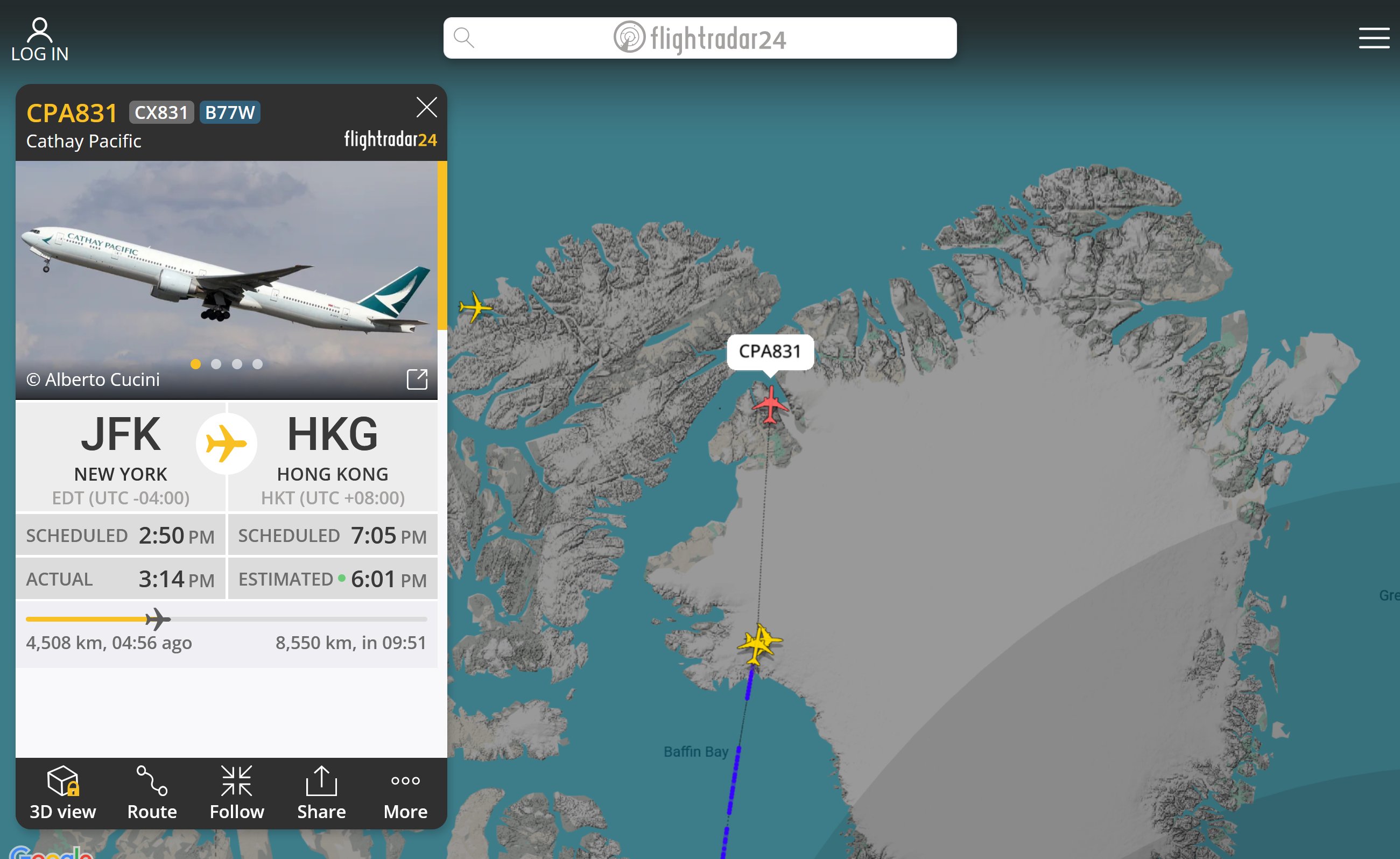
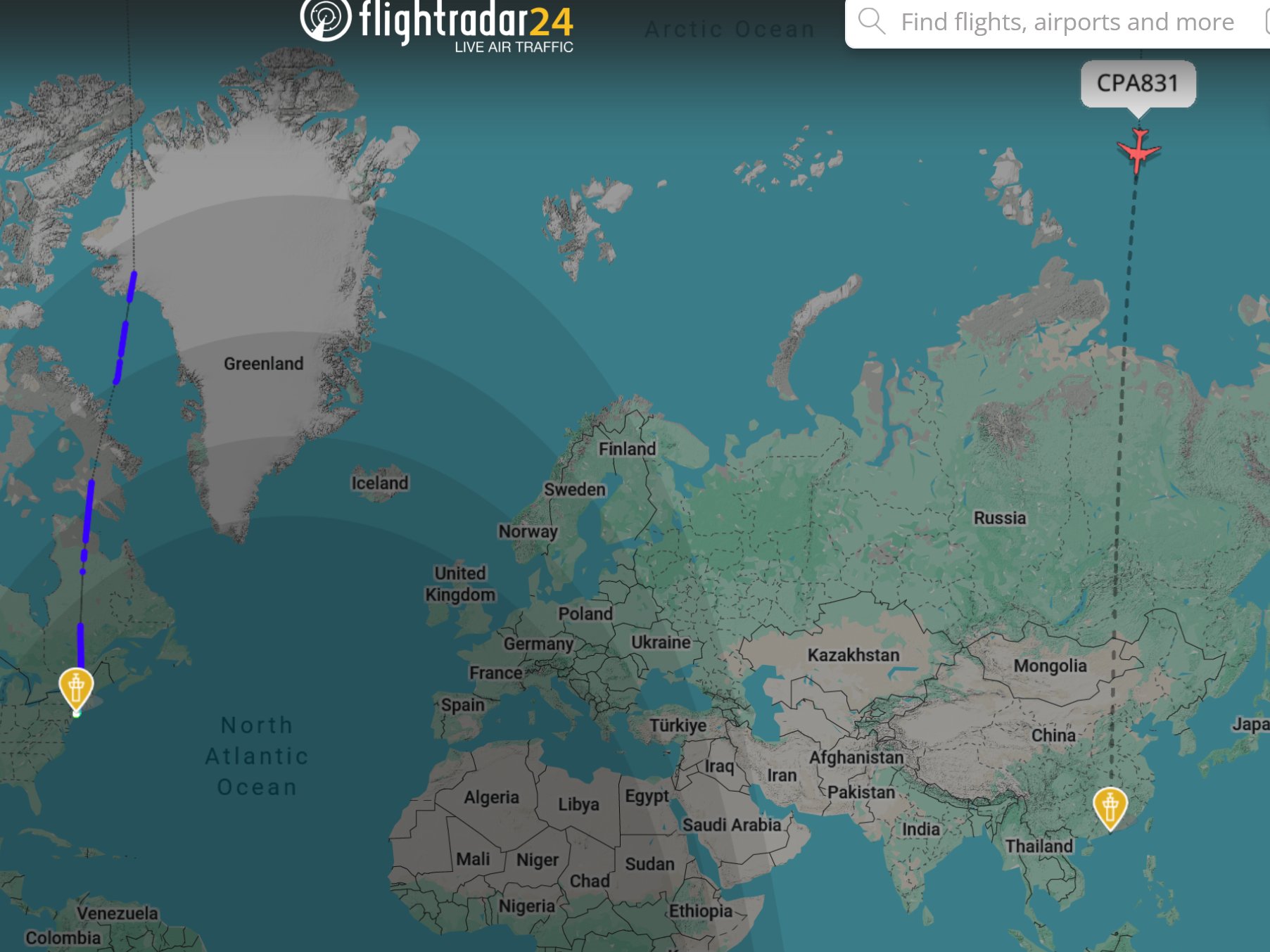
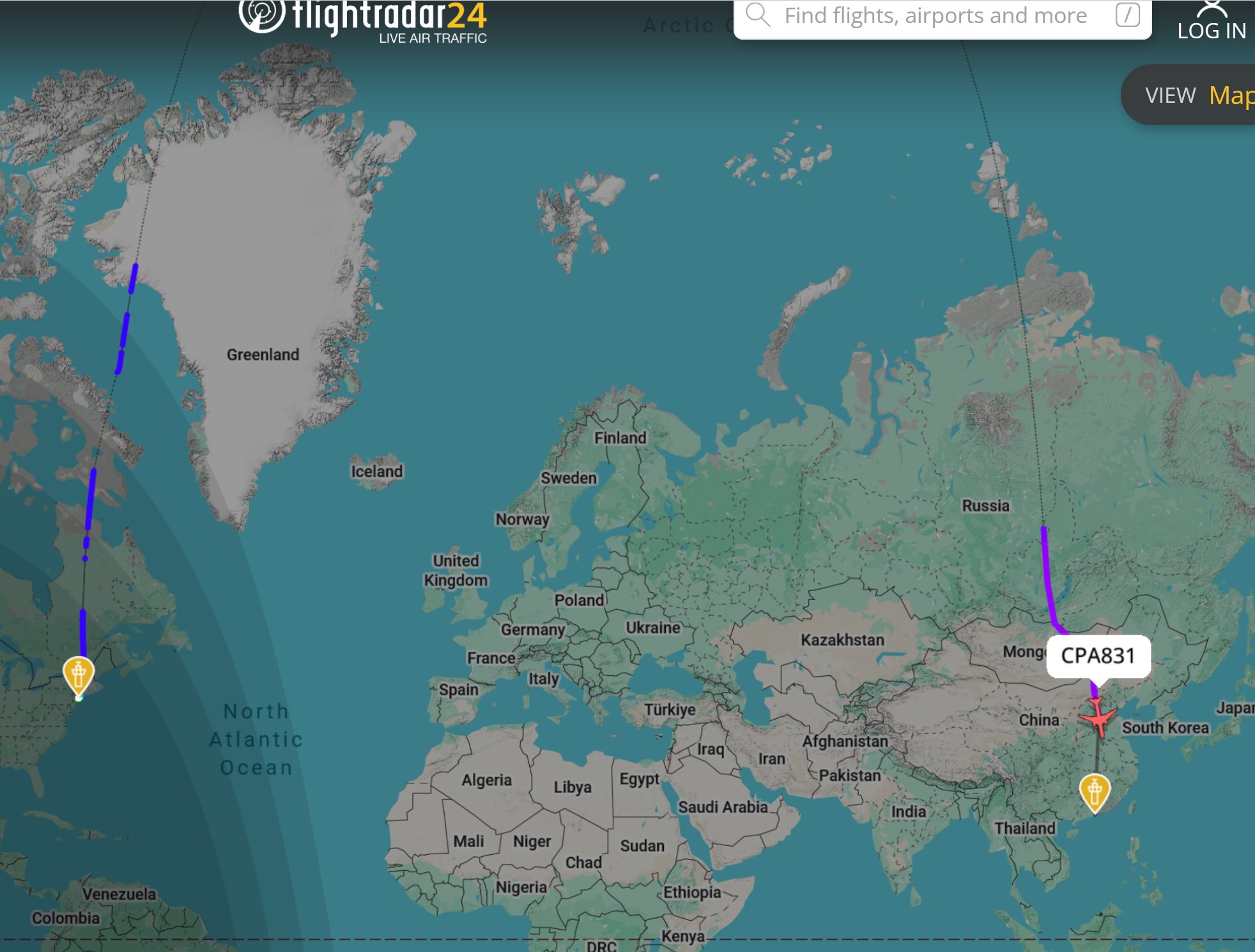
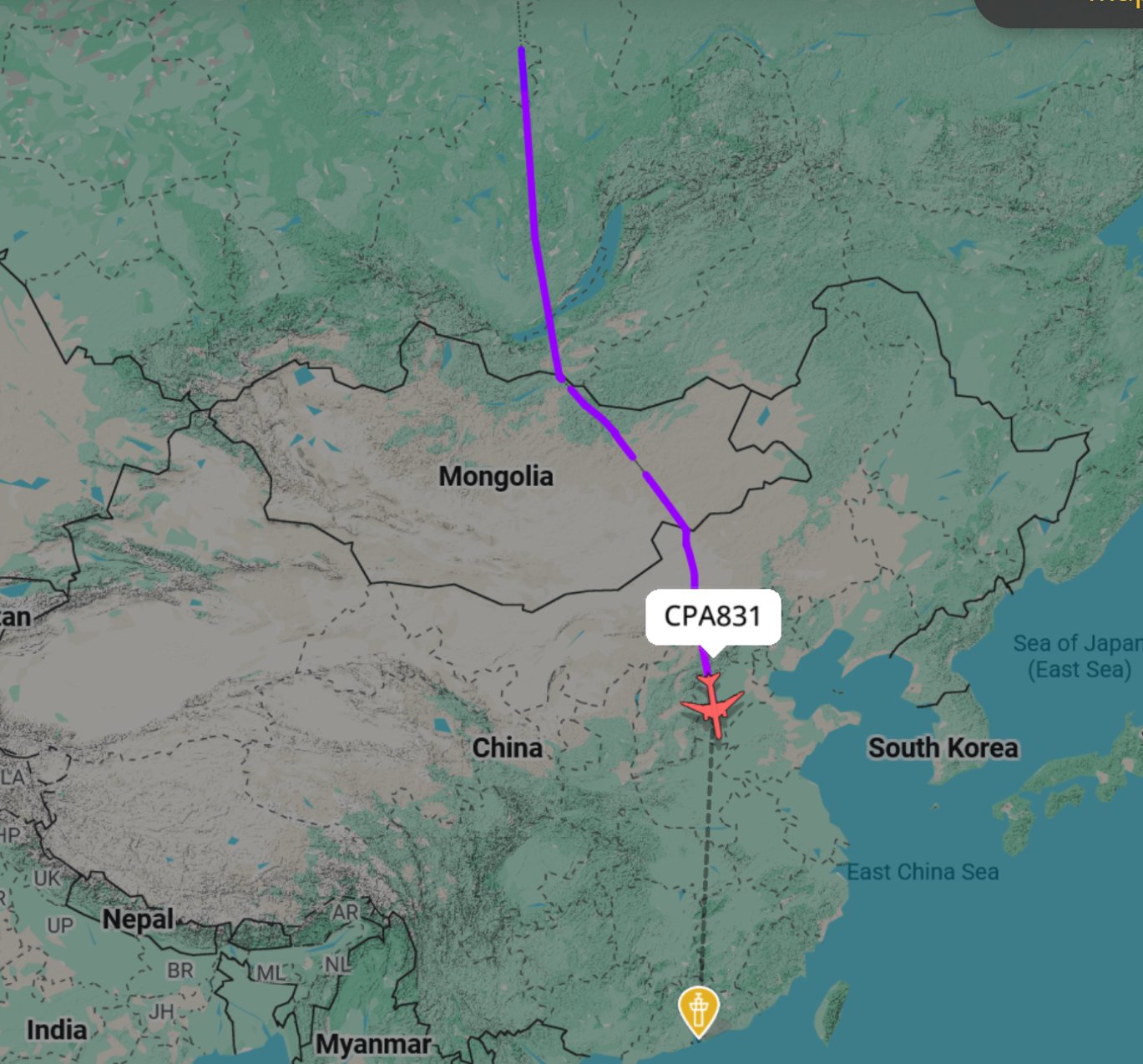
After I wrote that, I decided I could track one of those near-polar flights while doing other work. Cathay Pacific flight 831 was approaching Greenland on a course about 10° east of true north. I checked in every 30 minutes or so during that flight from New York City to Hong Kong with once a minute updates as it reached maximum latitude. I can confirm that FlightRadar24 fills in unavailable segments during a flight by extending a great circle from the last known position to the final destination. Later, when the flight is back on ground tracking, it appears that the missing segment is filled in by a great circle between the last known position (before the polar part) and the next known position (in this case in southern Siberia). This is not real flight data. Once over land, the tracks are governed by the usual "airways" requirements from one waypoint to another, subject to local regulation and ATC (that presumably explains the nice, clean deviations in the track as this flight passes over Mongolia, changing its course on-entry and again on-exit.
I'm including some screen captures during the flight. Notice, in particular, that the entry point in northern Siberia changes somewhat after the flight was back on live tracking. An important implication here is that some of those smooth curves we see in FR24 are not real. They are approximations, likely rather close to the true ground track in many cases, but it's worth keeping in mind.
When I tracked that Cathay Pacific flight through its maximum latitude, it was entertaining to watch, but it wasn't flight data. For reference, the latitude maximum, as displayed, was 89.56° at about 21:15 US Eastern time (4 hours from UT). The longitude swung around from 4°W at 21:11, through 36°E at 21:14 to 85°E at 21:17. That, of course, has nothing to do with map projections; it's just the nature of the coordinate singularity very close to the pole.
Frank Reed