NavList:
A Community Devoted to the Preservation and Practice of Celestial Navigation and Other Methods of Traditional Wayfinding



From: Trammell H
Date: 2026 Mar 25, 08:26 -0700
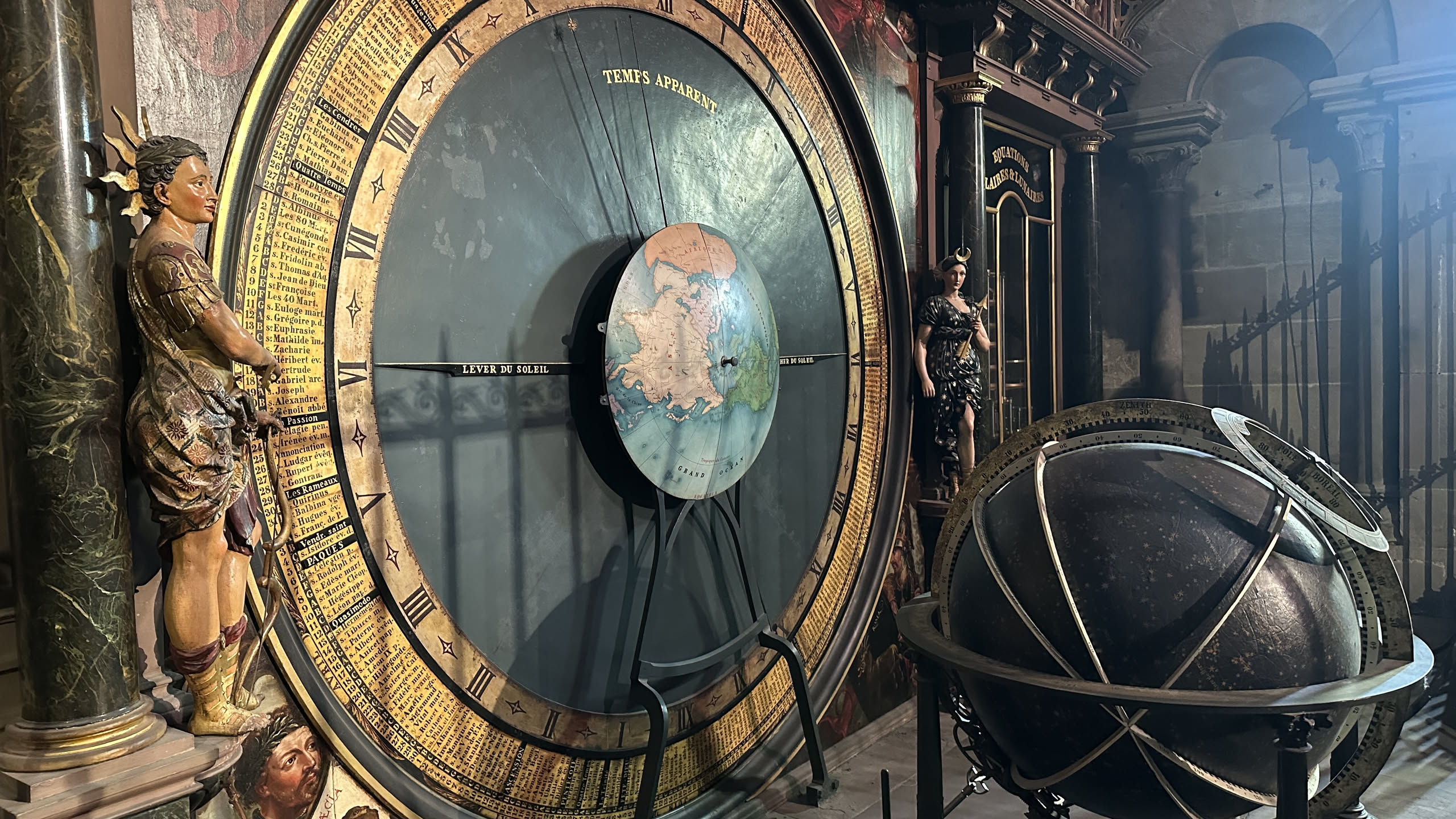
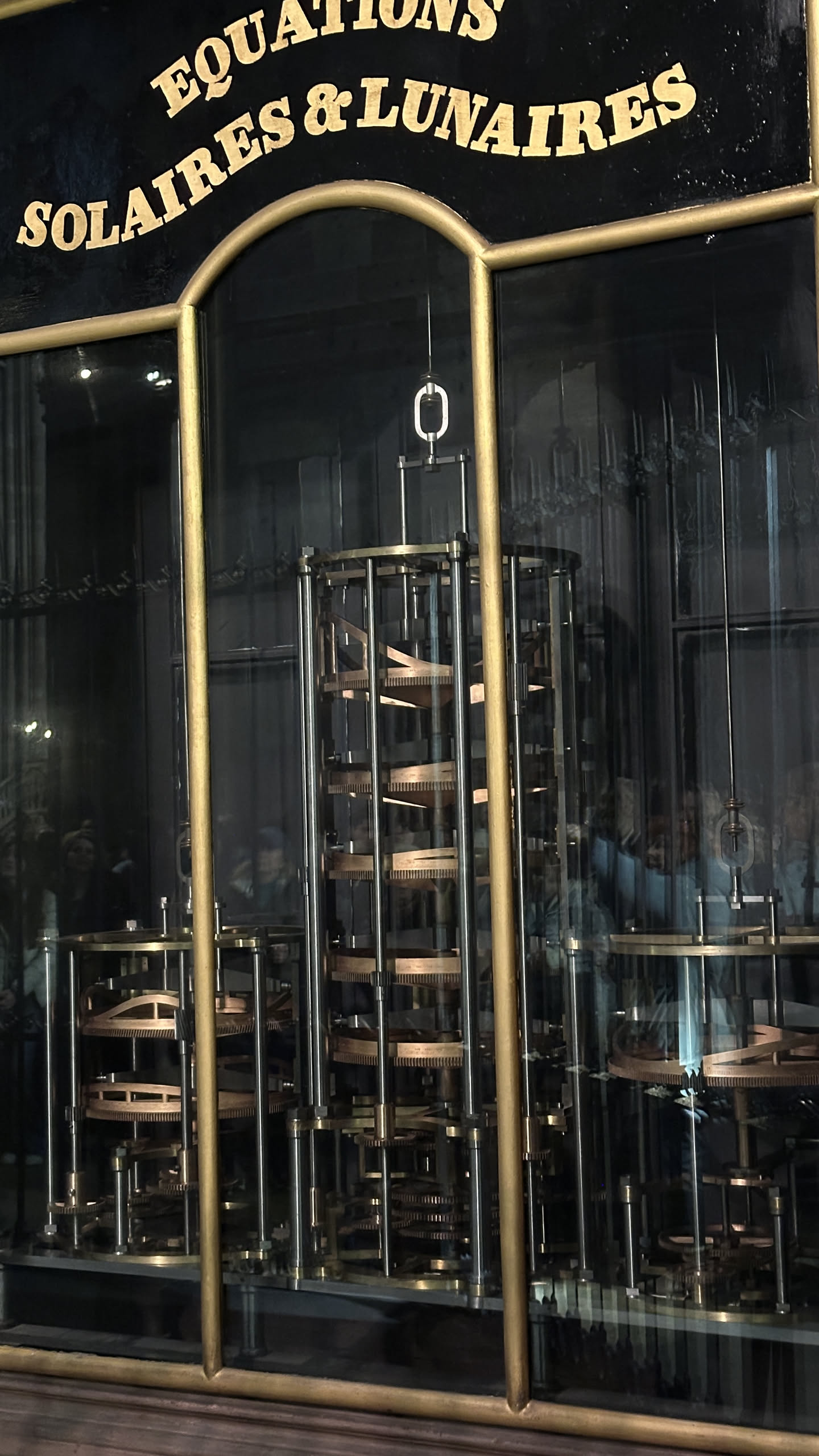
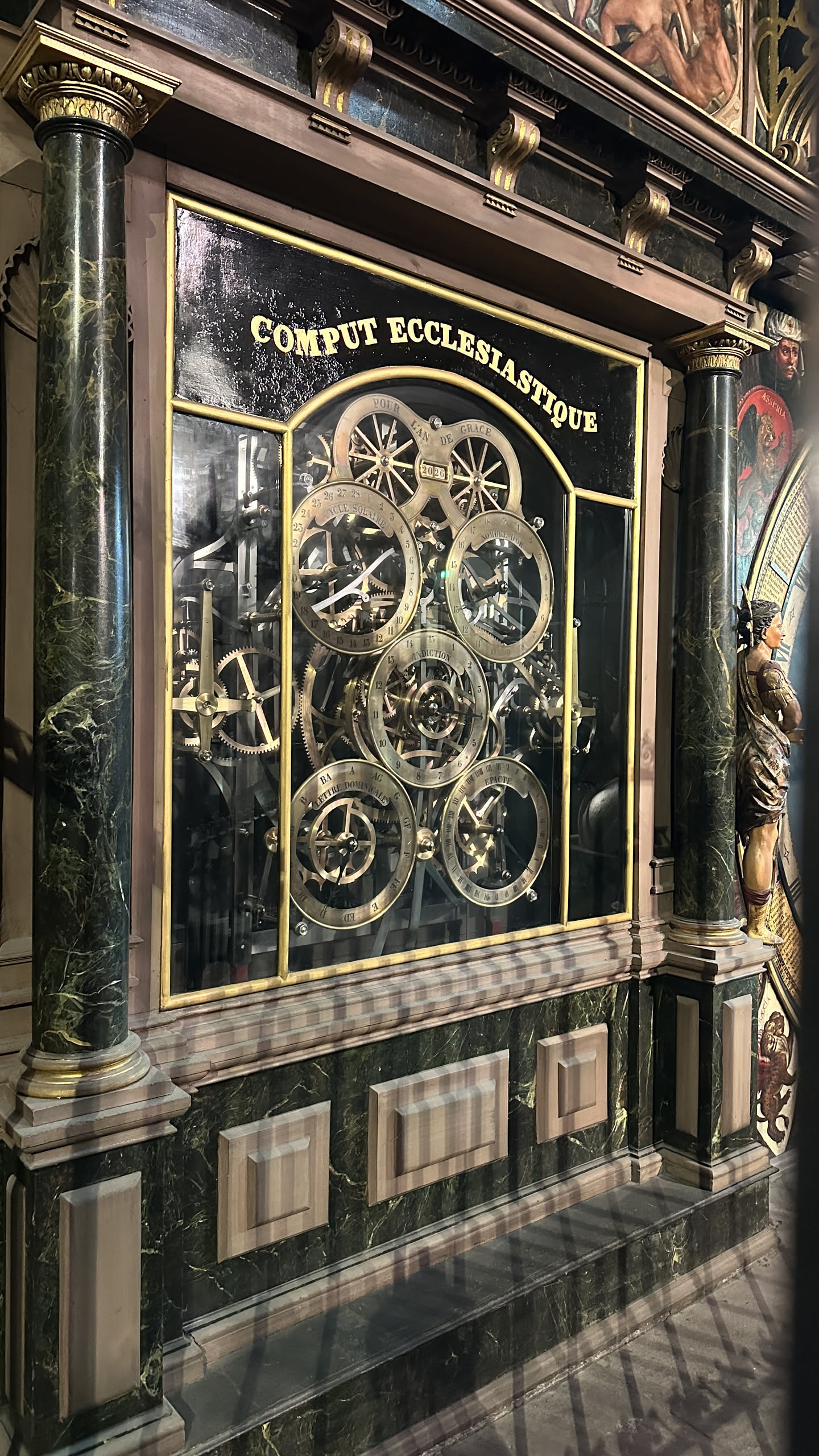
I just returned from a trip through Strasbourg and enjoyed the astronomical clock in the cathedral. It was built in 1843 and has a clockwork "computus" that runs once every new year to compute the date of Easter (and updates a giant dial of dates for the "movable feasts"), as well as a continously running clockwork "Equations solaires & lunaires" that computes the sunrise / sunset for the church's latitude, the declination of the moon and the sun, and their hour angles using a very complicated system of cams. The equation of time mechanism is quite clever - rather than a single large cam like the Long Now clock that precomputes thousands of years, the Strasbourg clock uses the sum of two cams, one for Earth's orbital eccentricity and another for the effect of obliquity, to compute the apparent solar time.
The clock face has indicators for the sun and moon and when the arms cross with the celestial bodies at the same declination, it indicates that an lunar eclipse will occur over the city. There are a separate set of hands on the clock for the local and solar times, and also a stellar globe that rotates and preceses based on the sidereal time computation. Quite a few more complications than will fit in a wristwatch!
Well worth the €4 ticket to watch the video with 3D animations of the gear trains and explainations of the various mechanisms.