NavList:
A Community Devoted to the Preservation and Practice of Celestial Navigation and Other Methods of Traditional Wayfinding



From: Antoine Couëtte
Date: 2025 Dec 27, 07:07 -0800
Dear Modris,
Thanks for the interesting data you published here which I am to compare with my earlier published results , both on printed copies so that I can investigate this quite unusual 0.2' discrepancy between Paul/Chauvenet's cleared distance on Dec 15th. BTW what are the Lunar 4.0 cleared distances themselves which you do not seem to have published here ? Also Low alt refraction correction for Mercury would be nice to accurately know since Paul and I are using slightly different refraction models.
You also asked : Can you provide some more details about your Mercury lunar observations.
I was hosted on Île d'Yeu for a few days by a couple of good friends - Husband and Wife - closely related to the Doniol Family. Now retired French Navy 5 star Admiral Guirec Doniol, the son of our "Doniol" NavList revered Engineer, had been a skipper of mine onboard one of the French Navy Aircraft Carriers when he was a Navy Captain and while I was Flying either F8E-(FN) Crusader or (rather ?) Super Etendard carrier based A/C.
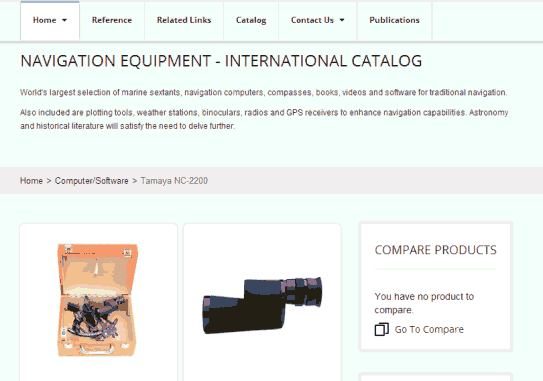
This Friend lent me his own Doniol-Lepetit sextant - with its magnifying telescope (X6 as I can recall) - extremely well maintained and cared for. I had ample time to check for its excellent accuracy since all of my 12 intercepts fell at or under 0.2' the day and evening before.
The Doniol-Lepetit sextants had been selected by the French Navy in the mid 1960's due to their outstanding qualities with all of them guaranted with arc errors under 9" (0.15') once performed the eccentricity corrections. These eccentricity corrections kept being published in arcseconds for actual altitudes readings in tenths of arcminutes, which enraged me because for each of these sextants I was to use I had to carefully hand-draw its own tailored corrections table in arc minutes and tenths !!! Throughout my active duty time (1972 - 1987) I was extremely familiar with them including when a carrier pilot.
For index errors I have always used a fast and expeditious check (not in any manual) allowing to tolerate minute lateral offsets between direct and reflected images of a pinpoint remote light source (stars preferred) : simply keep your sextant "vertical" while shooting as low as possible and keep both images at the same "altitude". On bright daylight with sharp horizons, you can even perform this onto the direct and reflected horizons themselves. I have to say that I do not trust the "official" SUN-MOON / MOON-SUN correction simply because it requires absolutely no lateral offset to be a valid correction.
UT reference was given by my i-Pad tablet, which I understand is rather UTC + some small lagging delay (0.5 s ?) . But I did not care here for the Lunars themselves.
(1) - First start with observing and recording the Moon altitude (and UT)
(2) - Second observe and record Mercury altitude (and UT), about one minute of time later than (1), which is quite easy to achieve.
(3) - Third, without "wasting" too much time see why in subsequent (4) - on Dec 15 th, it took me just over 2 minutes from (2) and slightly above 3 minutes from (2) on Dec 16th - very carefully prepare for and observe + record one single Lunar Distance (and UT). I had made a preliminary table of Sextant Observed Distances and I deliberatly shot for a slightly "smaller" LD in order not to loose Mercury inside the Moon limb, which explains for the observed positions offsets to the West.
Hardest and trickiest part done !
(4) - Fourth, at UT(4) = UT(3) + UT(3) - UT(2) shoot the Mercury Altitude again. Especially on the second day it was becoming difficult since Mercury was quickly fading away in the Sun glow.
(5) - Fifth, at UT(5) = 2* UT(3) - UT(1) shoot Moon Altitude,
Average the Mercury and Moon observed Altitudes which should - and do - fall very close (+/- 3 s) from LD UT.
Then you are in for a nice breakfast with your Friends with an en-route stop over at the boulangerie so that Kermit could offer croissants to thank them.
Start crunching ... the numbers afterwards then.
Hope it helps,
Kermit