NavList:
A Community Devoted to the Preservation and Practice of Celestial Navigation and Other Methods of Traditional Wayfinding



From: David Pike
Date: 2025 Feb 13, 10:27 -0800
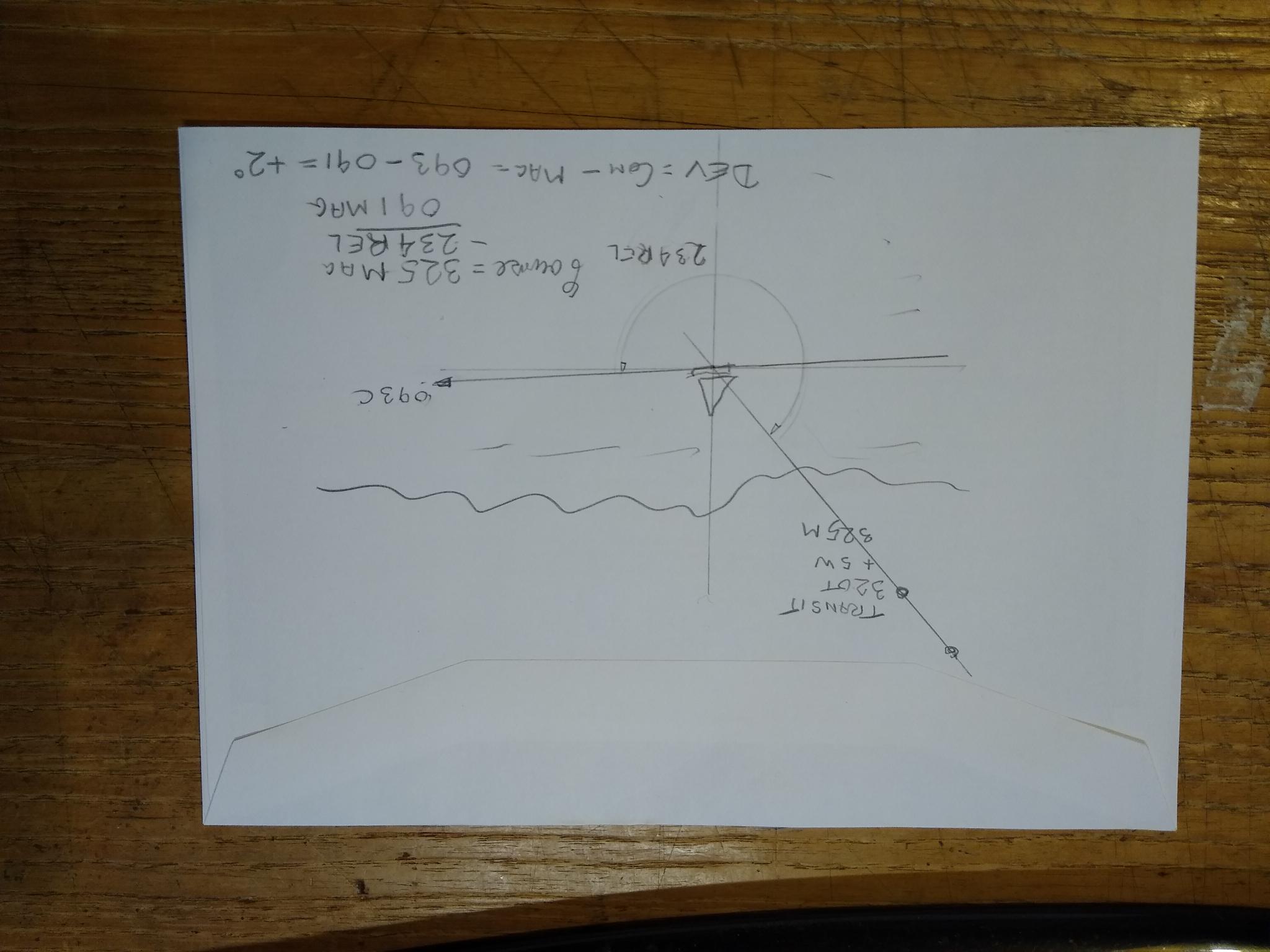
Nice one Gary, but what if it’s cloudy? The only two marine swings I’ve witnessed have been using the adjuster’s favorite transit. They never seem to go far offshore. If you don’t have an azimuth ring, you can use an astro-compass in the relative bearing mode. Just move slow-ahead on as near the desired course you can manage and take the relative bearing of the transit line as you pass through it. See the diagram.
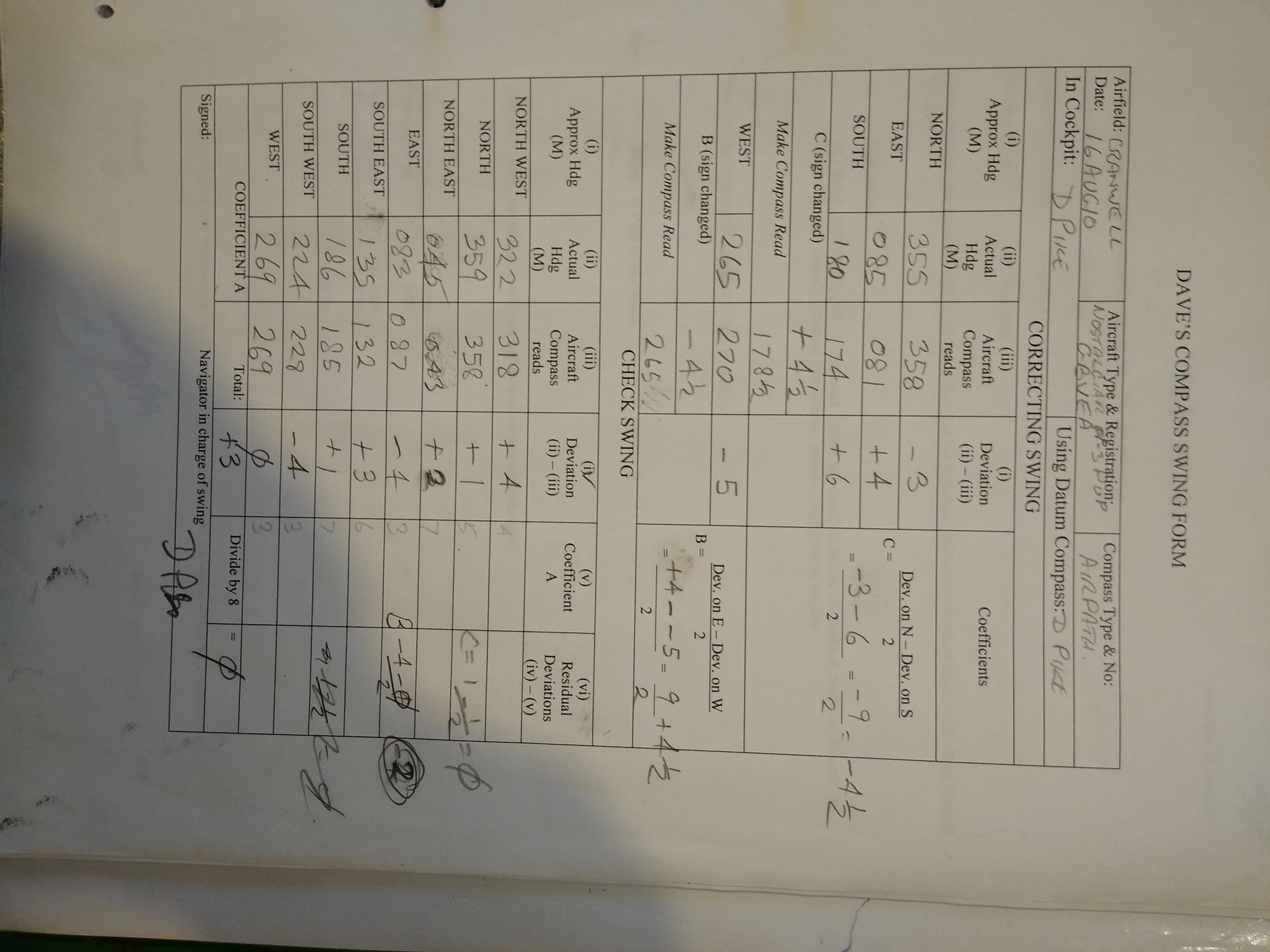
I haven’t any examples of marine paperwork. All I’ve got is an aircraft swing from my little Mosler Pup G-BVEA in 2010 (see photograph). As You can see, I was an untidy devil in those days. I wish I could show you a swing for a Vulcan with twin Smith’s MFS gyro compasses swung to 0.1 degree and two E2s. That was an all-morning job for a nice aircraft and an all-day job for a naughty one. Very nice in the summer with the skylarks singing, but not so good in the winter for the Radar-Nav (me) trailing round behind with the Watts Datum Compass in the rain and the mist. I did my first swing aged about 18 in a Chipmunk with London UAS. I sat in the cockpit taxying with the compass log on my knees while a ground crew chap swathed in oilskins followed me round with a landing compass. Then he wandered round until he was positioned off my wingtip where he raised or lowered his arm to indicate the heading he’d just measured. To adjust the P Type Compass, you had to remember which hole to stick your ‘key, compass corrector 6E337’ into. The B hole was fore and aft, and the C hole was athwartships. I seem to remember being taught a ribald little rhyme to help you remember which was which. Do you remember Howard G? Ah! Happy days. Dave P