NavList:
A Community Devoted to the Preservation and Practice of Celestial Navigation and Other Methods of Traditional Wayfinding



From: David Pike
Date: 2025 Nov 1, 13:46 -0700
Antoine you wrote: "
Such "correction" - seemingly unanswered as of to-day (Nov 1st, 2025) - is to cover (at least) both Refraction "below" the horizon as well as Dip.
Can/could anybody get hold of and publish here such Corrections Table(s) specially devised for such Airships then ?"
Antoine
You remain as objective as ever. We overlooked the main question, formulae or tables. Airship use spanned many decades, and they were used by several nations. I blame Monsieur Giffard for starting it all. Therefore, probably both methods were used depending upon time and place. It’s also true that you can’t produce tables without having the formulae first. As to “how high do the tables and formulae work”, evidence is available. However, editors, being always short of space, are forced to keep in only that which they feel remains necessary in order to make space for new stuff. You just need to keep your eyes open for examples of the older tables and remember where they’re hidden.
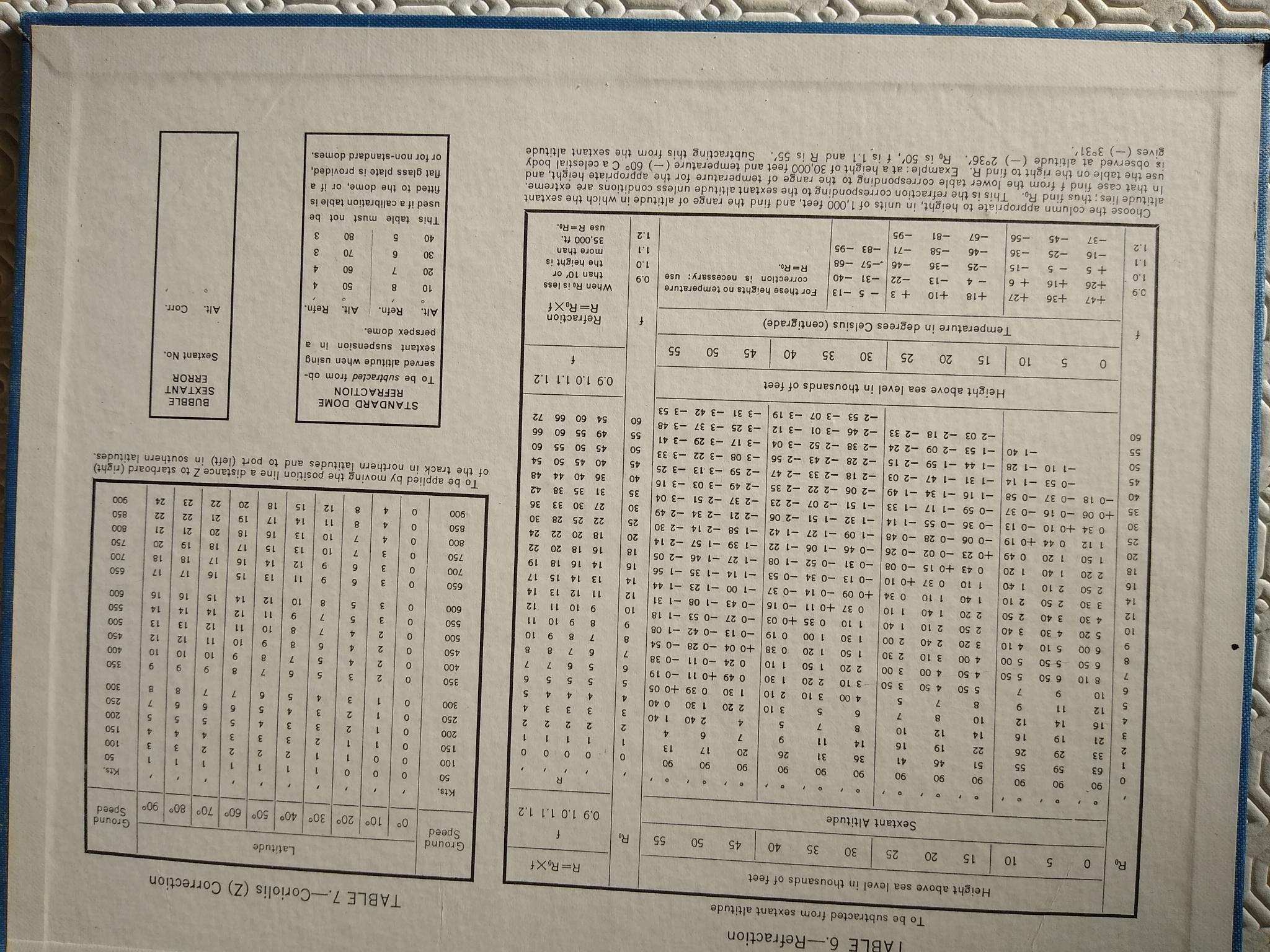
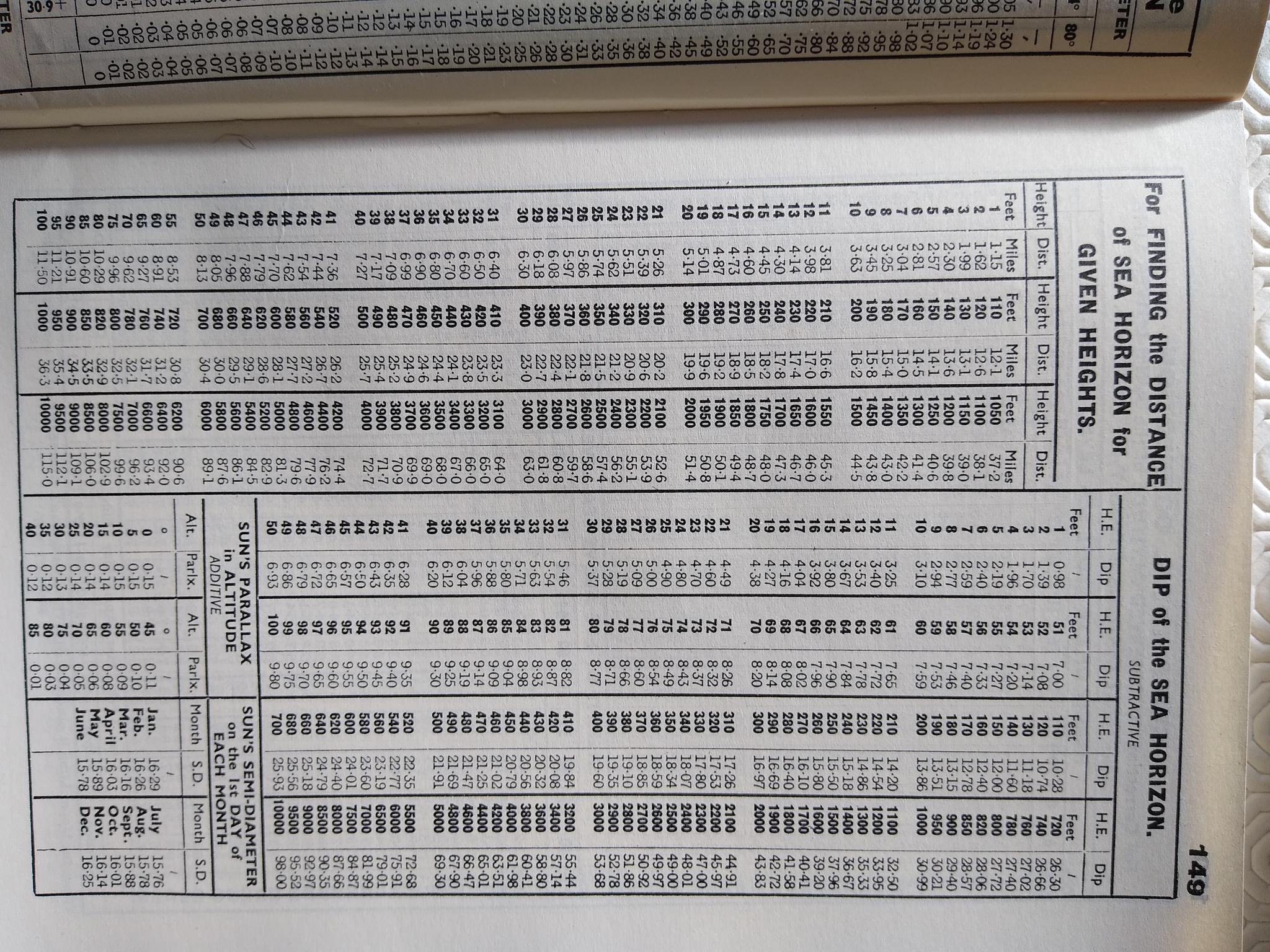
I’ve no examples of tables printed specifically for airships; there might never have been any. There were relatively few airships in service at any one time. However, the 1969 edition of Norie’s gives a dip table extending to 10,000 ft altitude on page149. The inside back pages of AP3270 (HO149) Vols 1, 2, &3 have refraction tables extending to 55,000ft altitude.
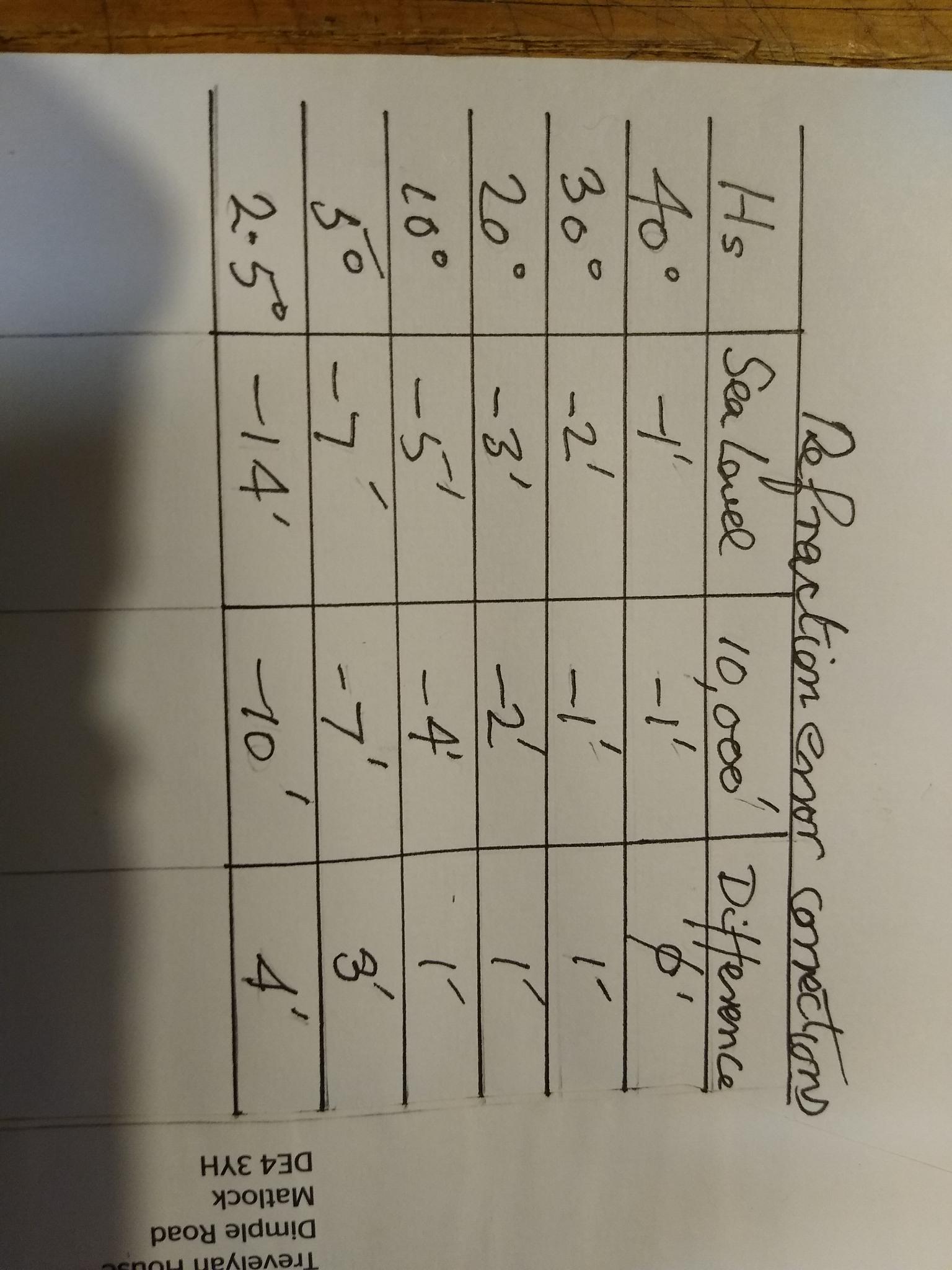
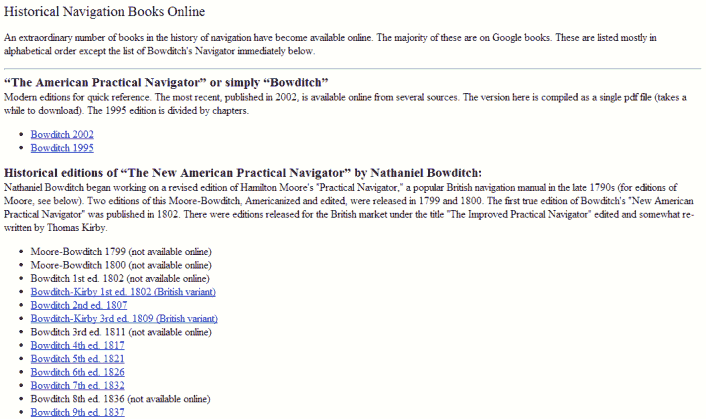
Airships might well have simply used the sea level refraction tables. Even at 10,000ft, apart from relatively low height-sextants, the difference in refraction is acceptable by air navigation standards. See photographs. DaveP