NavList:
A Community Devoted to the Preservation and Practice of Celestial Navigation and Other Methods of Traditional Wayfinding



From: David Pike
Date: 2026 Mar 17, 13:42 -0700
Joshua Carty asked:
How accurate were sights with bubble sextants aboard "best" military (USAF, other air forces?) aircraft at the end, before they were replaced by GPS? Do we know?? Was there any real way to test their accuracy in flight?
Josh
A typical value in the air was around 3nm. Anything less than 2nm was very good, and anything less than 1.5nm was pure luck. To check the accuracy with all aids serviceable, all you had do was check the ensuing position line against the aircrafts true position from the aircraft’s Ground Position Indicator which was usually accurate to around ½ nm and frequently less. However, what we did with all aids switched off and relying purely on celestial was plan a route, say 1000 miles out into the Atlantic and back and score how far we ended up from our declared end point. For competition work, there was also an end-time element. Our end point and time was usually scored by a Radar Bomb Score Unit. The RBS tracked you using modified WW2 anti-aircraft artillery radar like the US used for bombing in Vietnam. Was it called ‘Skyspot’? The equipment drew your track on a large sheet of paper giving a little notch every second (I think). You got a colleague to transmit a 1khtz tone which was switched off when you believed you’d reached the end point. I can’t remember now (it was a long time ago) if the tracking pen gave a bigger notch or an airman drew a line across your track at the required point.
If no RBS was available, you switched the H2S radar, which was in ‘Standby’, to ‘Transmit’ and took a photograph of your H2S radar screen using the built-in R88 camera. Back on the ground after the film was developed and printed, you identified three significant radar returns about 120 degrees apart from the radar photograph; placed tracing paper over the photograph; and drew lines from the centre of the photograph through the three points. Then you wiggled your tracing paper around over a 25,000 topographical map and identified where you had ended up. As a staff officer, I once had to do this during an RAF competition with B52 guests taking part. At my elbow was a same rank, same trade, approximately same age USAF observer scowling suspiciously. The only thing to do was to hide my result and invite him to try for himself. Believe it or not, our results were the same, so the system did work.
The results we used to get for end point accuracy were around the same as I’ve mentioned above although the odd 10 nm was not uncommon, and one of our crews, upon turning on their H2S, found themselves well into French airspace. The French weren’t too worried. They’d been watching the Vulcan all the way round, and at FL430/410 it was well above any civil traffic of the time.
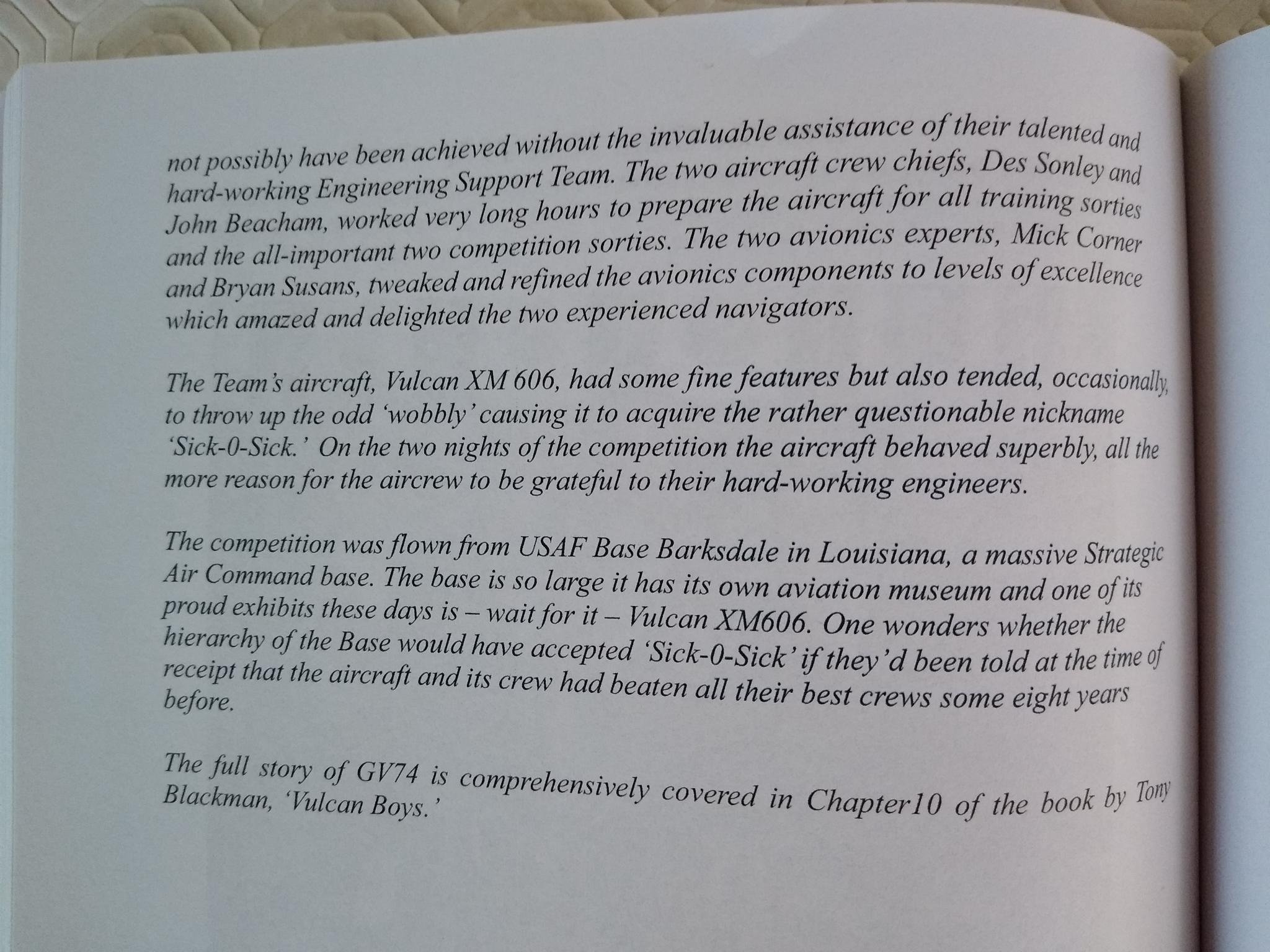
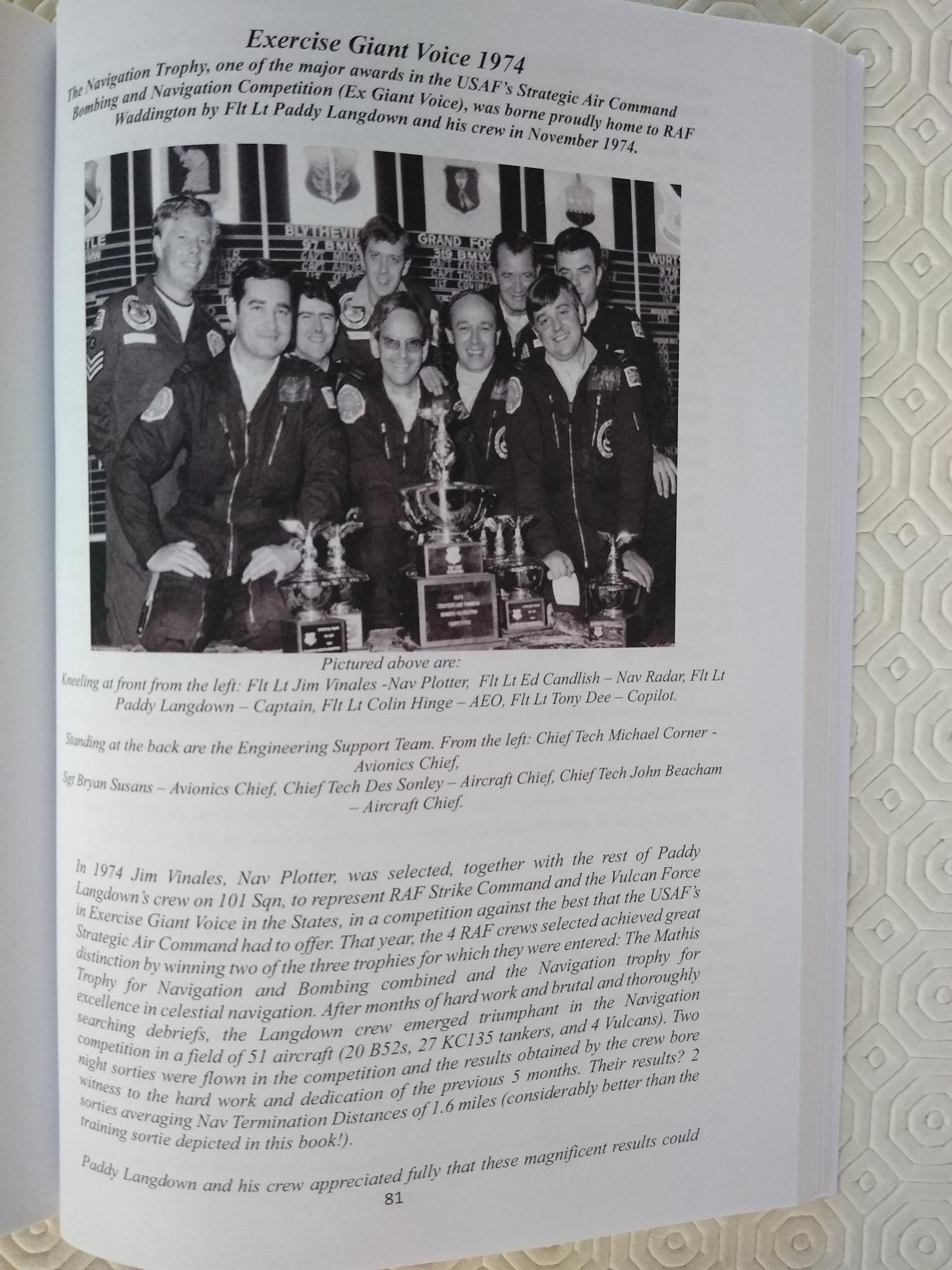
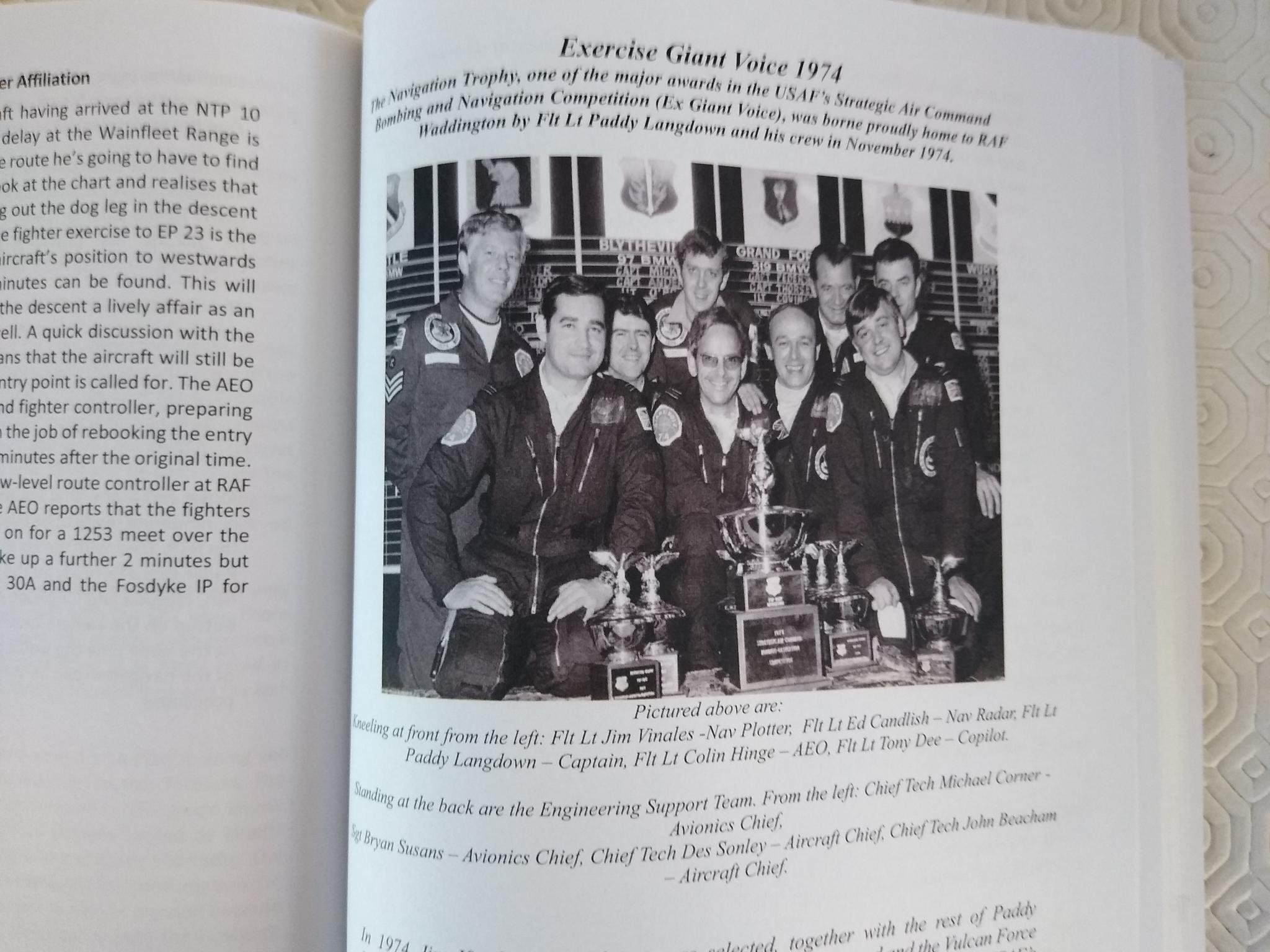
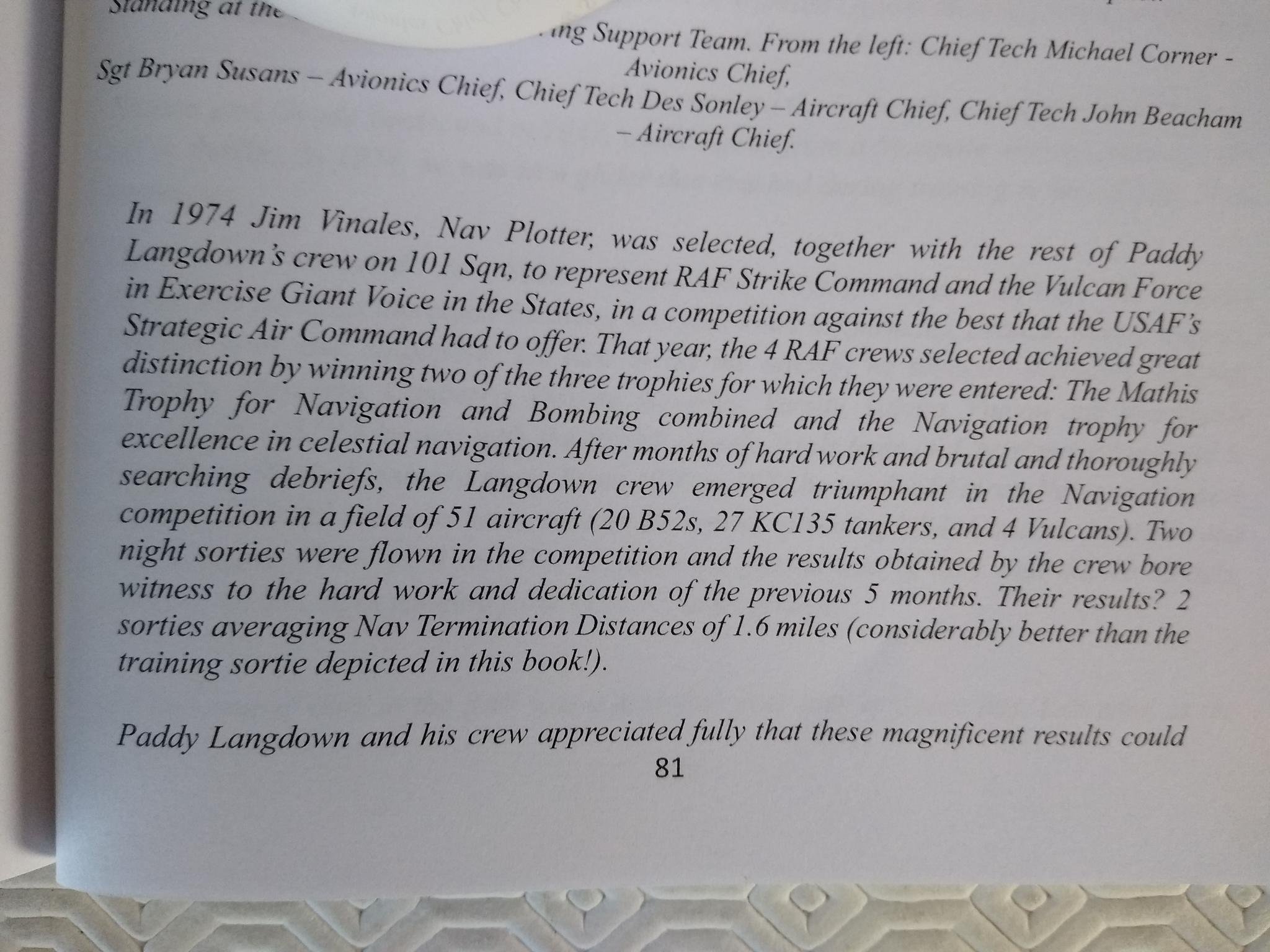
To give you an example of what might be achieved, I’ve attached photographs (best on a PC screen) of an article about the 1974 SAC Giant Voice Competition when an RAF Vulcan Crew beat 3 other Vulcan, 20 B52, and 27 KC135 crews with an average end point accuracy after two night celestial sorties of 1.6nm. DaveP