NavList:
A Community Devoted to the Preservation and Practice of Celestial Navigation and Other Methods of Traditional Wayfinding

Re: American navigation.
From: Frank Reed
Date: 2009 Oct 30, 17:07 -0700


From: Frank Reed
Date: 2009 Oct 30, 17:07 -0700
George H, you wrote:
"We have previously discussed the reputation, in the 19th century, for
rough-and-ready navigation of American vessels"

Yes, and while this story may have happened exactly as described it also may
be an anecdotal "sea story". And like all sea stories, this one is a parable,
intended to make a point and draw a gasp of disbelief from the listener...
"No way! He used the map in the back of the Bible??! What a crazy thing to
do!" Your source is telling this story, not because it's normal or common,
but because it's such a great story of exceptional behavior.

Back in the mid-70s, I remember a documentary talking about navigational
incompetence, and at one point they interviewed a Coast Guard officer who
told a story about chatting on the radio with a woman who was lost. She had
sailed from Miami and was looking for Bimini (check a map --except for the
worrisome Gulf Stream, this is a fairly short voyage with no navigational
complexity). When asked about charts, the story-telling officer claimed that
she said she had the World Almanac (not the Nautical Almanac, but the common
"World Almanac" that you can buy at any book store) open to the map of the
Atlantic Ocean and she couldn't find Bimini. Doesn't that sound familiar? I
was quite impressed by the story back then (at the impressionable age of
thirteen), and I have re-told it many times. But in fact, it's a
long-standing "sea story" that exists in various forms. Back in 1900, an
average "simple man" might carry his Bible to sea with him. In 1976, an
average "simple woman" (it was the 70s...) might carry the all-too-popular
World Almanac to sea.

This particular "simple man" navigation story to me resembles the oft-repeated
computer tech support story about the customer who is looking for the "any
key" on his keyboard ("the computer says, 'press any key to continue,' but I
can't find the 'any' key"). From noted urban legends expert Barbara
Mikkelson:
 "True, 'stupid guy' tales abound in every profession and hobby, but the
experience of feeling outwitted by the machine is almost universal in the
online world, thus the identification with this particular set of tales is
widespread. Such lore also provides a measure of comfort in that it's
reassuring to think there are folks out there who've done even dumber things
than we've so far managed to do. One needs reassurance that one is not
entirely clueless, and these tales supply that. They also help rebuild the
somewhat damaged self esteem of computer users who have just realized they've
done something particularly brainless."
(see http://www.snopes.com/humor/business/wordperfect.asp)

And I think that applies exactly to navigation, too.

Of course, needless to say, there are, there were, there will be, and there
always have been, mariners from EVERY country who navigate/navigated/will
navigate using primitive or traditional means. When they have good p.r.,
commentators marvel at their aptitude and suggest that they must be "in tune
with the rhythms of the oceans". When they have bad p.r., pundits marvel at
their ineptitude and suggest that they are "lucky fools who have survived in
spite of themselves". None of these tales tell us much about the state of
"American navigation" now or in the past.

-FER
PS: By the way, the last time this came up we had some discussion about the
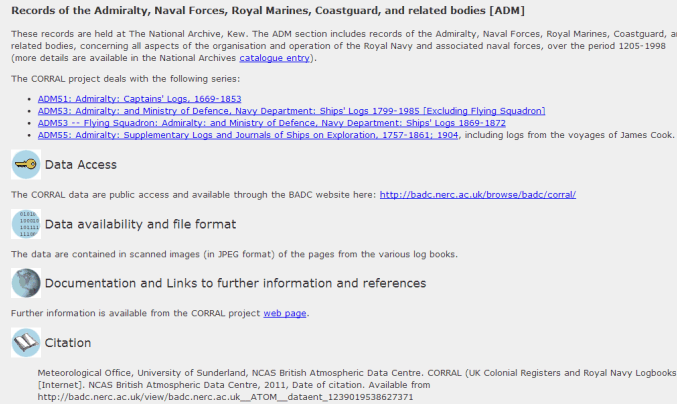
number of logbooks extant (in particular whaling logbooks). I saw some
numbers on this back in August, filed them away in the back of my head, and
I've been meaning to post them. Now seems like a good time. There were
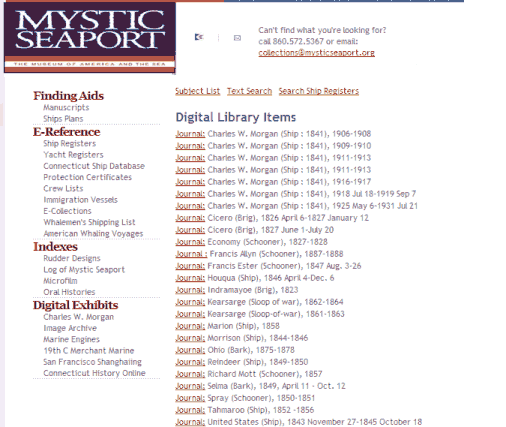
approximately 15,000 pelagic whaling voyages made under the flag of the USA.
Approximately 5,000 logbooks are preserved in research libraries. Among the
major collections, in order of total volumes: the Providence Public Library
in Providence, RI, the Kendall Institute at the New Bedford Whaling Museum in
New Bedford, MA, and the Collections Research Center at Mystic Seaport in
Mystic, CT. Those three together have the majority of the surviving logbooks
from American pelagic whaling voyages, and they are all open to examination
and study by any researcher.


--~--~---------~--~----~------------~-------~--~----~
NavList message boards: www.navlist.net
Or post by email to: NavList@navlist.net
To , email NavList+@navlist.net
-~----------~----~----~----~------~----~------~--~---