NavList:
A Community Devoted to the Preservation and Practice of Celestial Navigation and Other Methods of Traditional Wayfinding


From: François Goldite
Date: 2026 Sep 3, 06:06 -0700
Frank,
Thanks for the detailed look — most of this is fair, and one part of it turned up a real bug, so let me go through it.
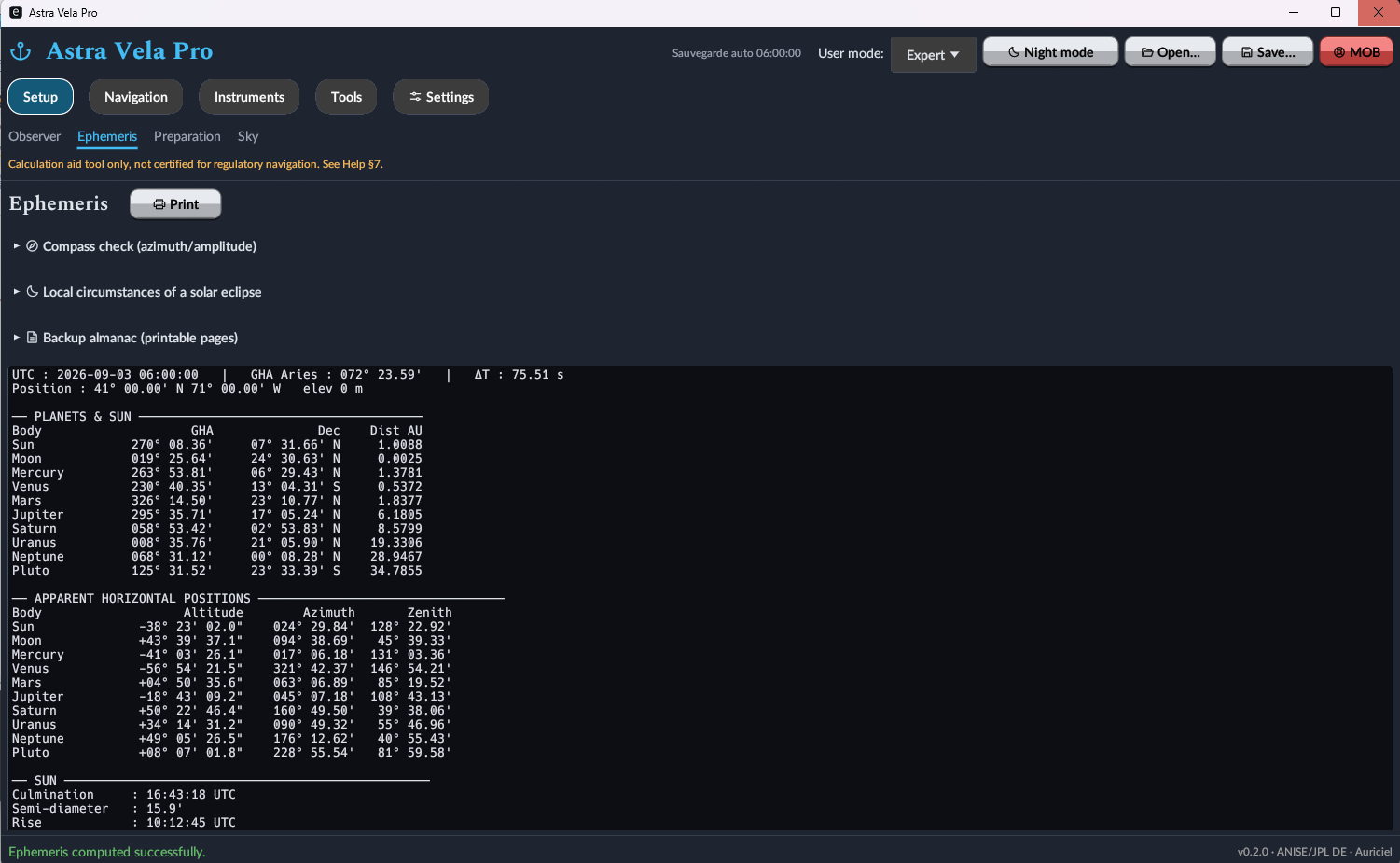
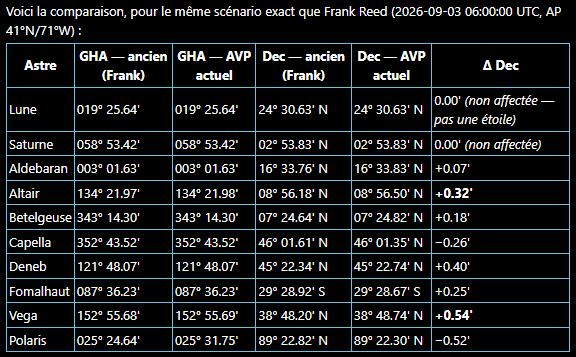
Star declinations: you were right, and it's fixed. The annual aberration term applied to declination had its sign inverted relative to the right-ascension term (which is why GHA came out fine while Dec didn't). The programI derived the correct vector-form formula (transverse projection of Earth's velocity onto the two tangent directions at the star's unit position vector) and it flips the whole declination expression. Applying the fix moves Vega's Dec by +0.54' and +0.56' at your two test dates, and Altair's by +0.32' both times — matching your reported errors (0.5' and 0.33') almost exactly. I also tightened the star-declination tolerance in the automated USNO regression test from 1.0' to 0.3', since the looser tolerance is exactly why this got through undetected. Fixed and tested in both editions.
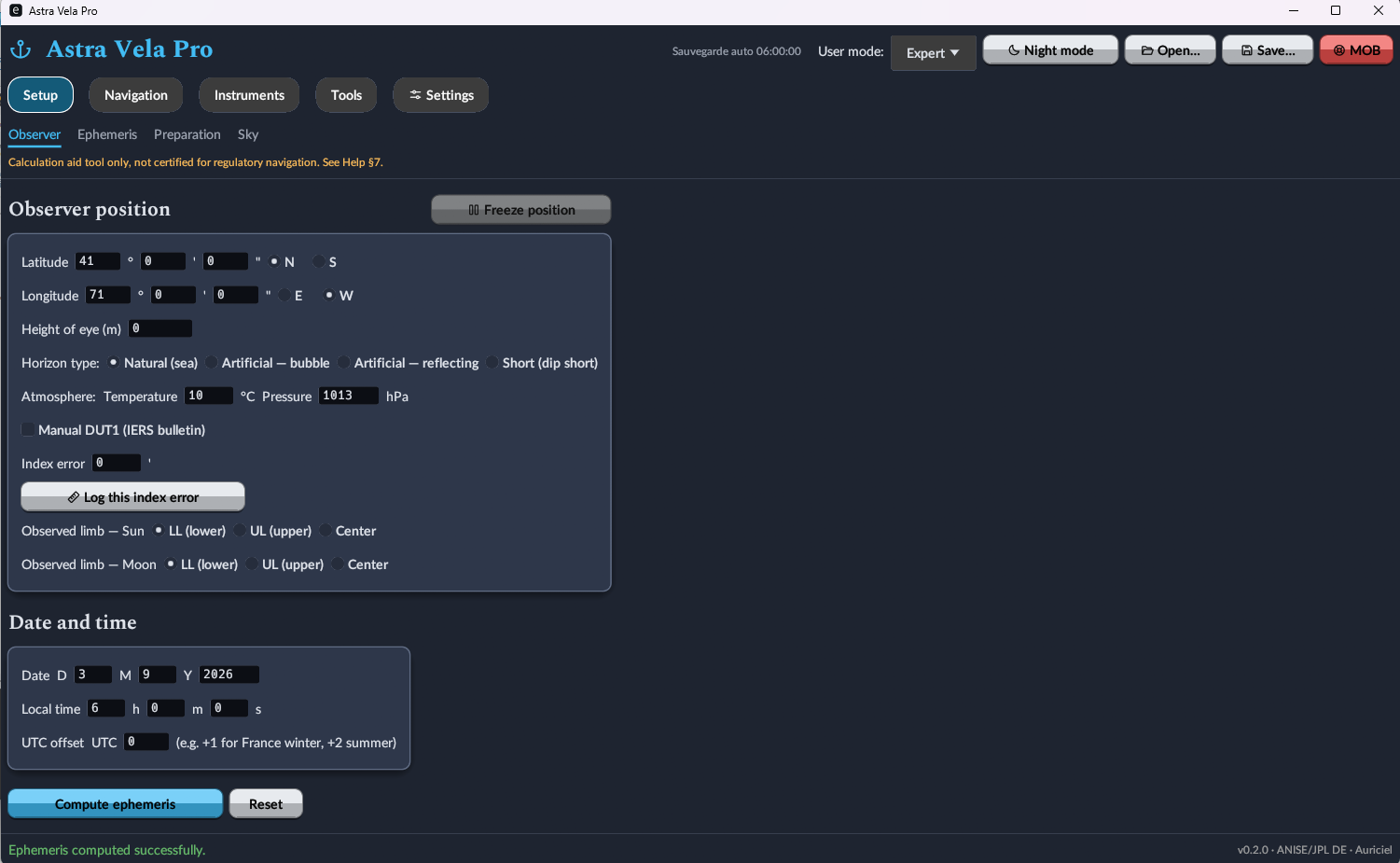
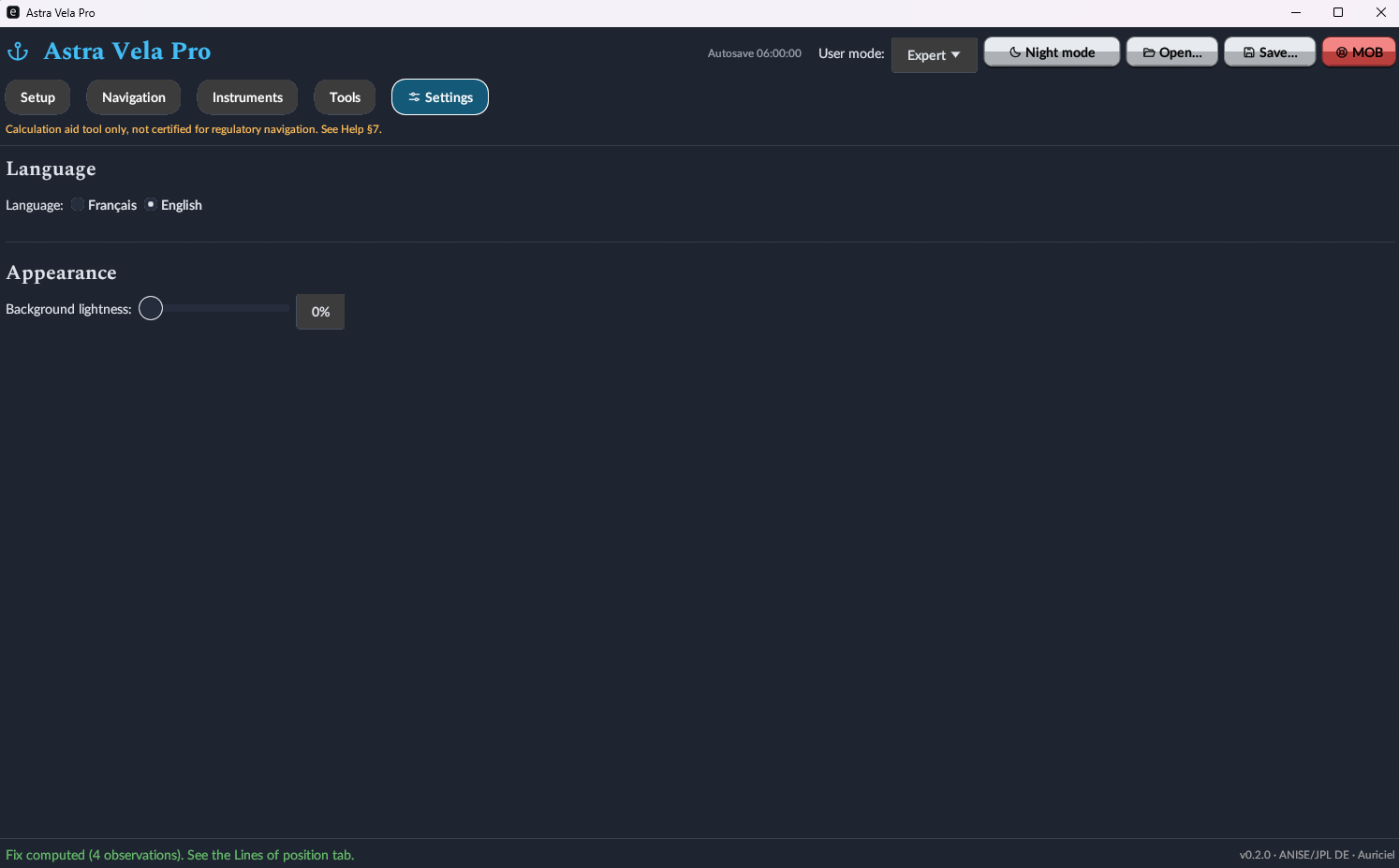
Interface / language switch: also already addressed, as of this week, from separate forum feedback. Settings (language, plus a new background-lightness slider) now has its own tab, always reachable, instead of being buried at the top of Observer. Not in a downloadable installer yet, but done.
Date field editing: found and fixed one real bug here — an empty Year field defaulted to year 0 instead of the current year, which is exactly the kind of spurious error you ran into. The specific "replace 9 with 7" friction I couldn't reproduce (Day/Month/Year all select-all on focus, so overtyping a single digit should just replace it) — if you can give me the exact click/keystroke sequence, I'll drive the app myself and find it rather than guess.
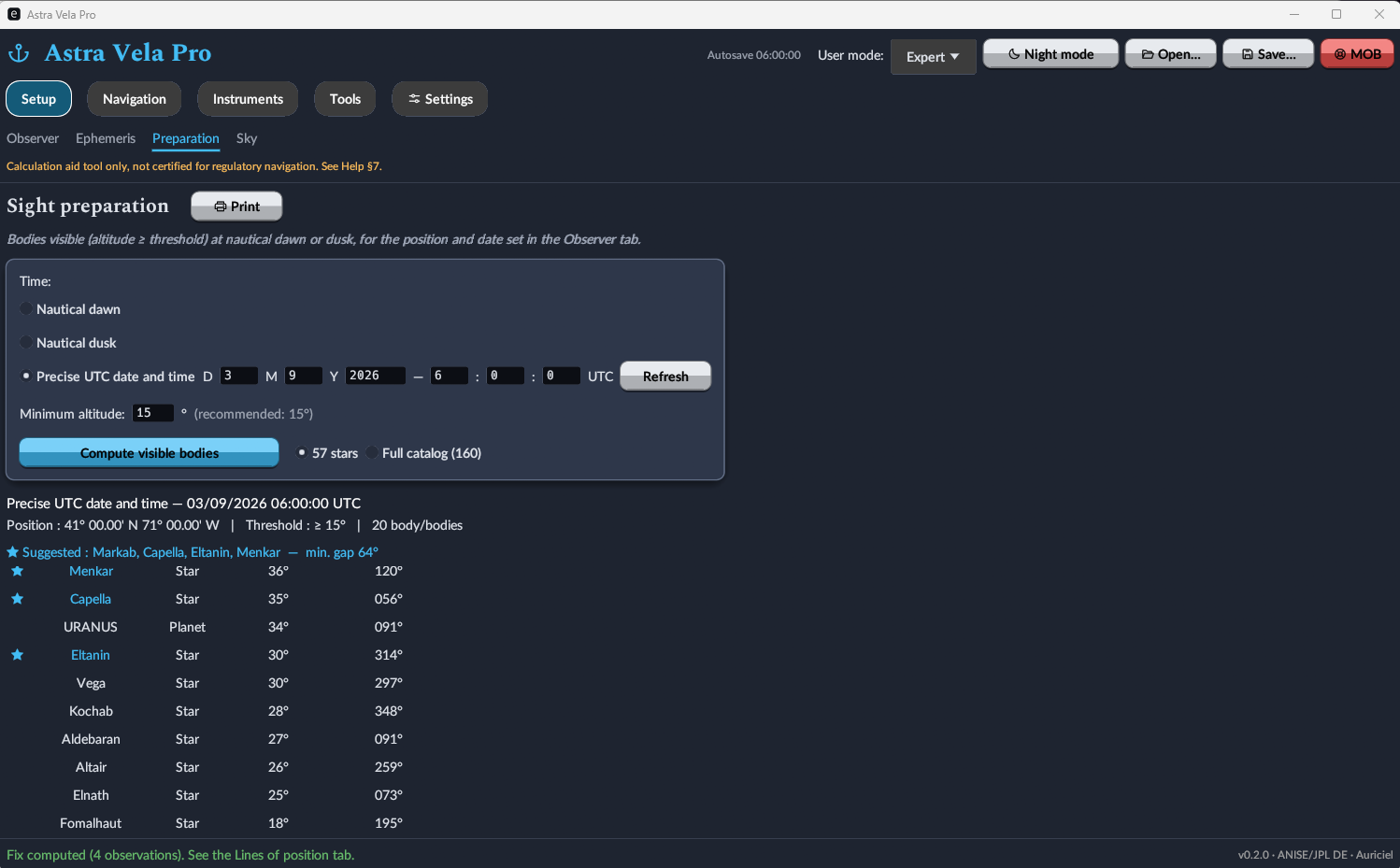
Precision on the planning page: agreed, and fixed — the twilight star-candidate table now shows altitude/azimuth to the nearest degree instead of a tenth of an arcsecond. The finer precision stays in the actual sight-reduction output, where it's arguably still more than needed, but that's a separate discussion.
Faint stars, outer planets, star chart: no changes yet. Those are scope/design calls I'd rather not make unilaterally off one message — I'll think about a stricter default catalog (naked-eye navigation stars only) and whether Uranus/Neptune/Pluto belong in the sight-reduction list at all. The star chart is what it is for now.
This is a hobby/freeware project, not a commercial one with a QA team, so bug reports like this one — with actual numbers, across two epochs — are genuinely how it gets better. Thanks for taking the time.
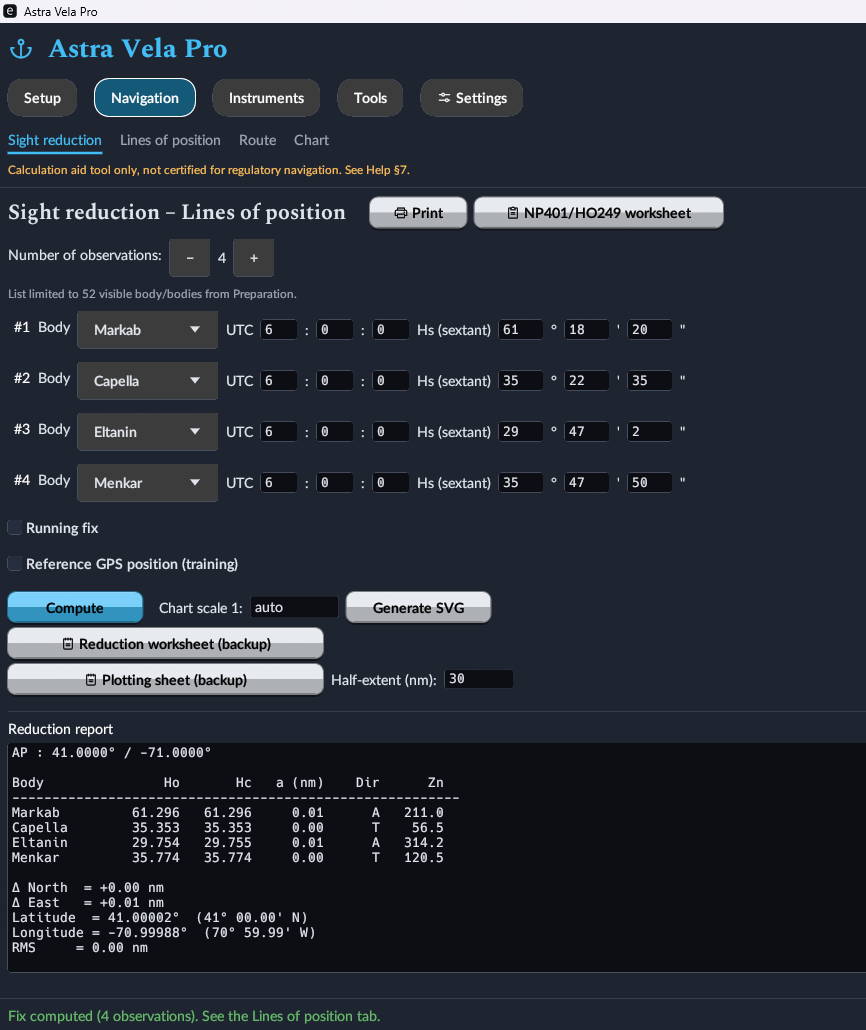
You'll find attahed screen captures of the next version(v.2)
François Goldite