NavList:
A Community Devoted to the Preservation and Practice of Celestial Navigation and Other Methods of Traditional Wayfinding



From: Frank Reed
Date: 2026 Oct 5, 09:35 -0700
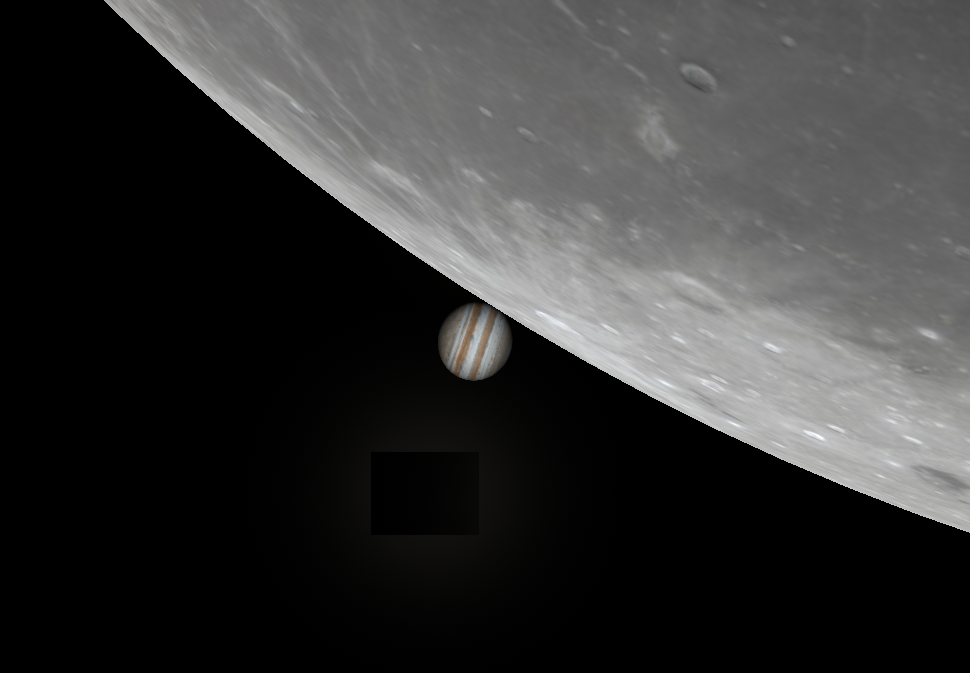
In the eastern US, eastern Canada, as well as Bermuda, Bahamas, etc., the Moon will occult (eclipse) Jupiter tomorrow before sunrise. Check the times for your location using Stellarium or a similar app. Or just stay up all night and watch! I highly recommend binoculars or a sextant scope for this, at minimum. The Moon will be about 20% illuminated, so not overwhelming. For my location, the Moon begins to eclipse the 0.6 minute of arc body of Jupiter itself at 4:25am Eastern US time. Start watching 15-30 minutes earlier. The occultation/eclipse ends about 65 minutes later. That's actually more fun to observe since the bright disk of Jupiter will emerge from the dark limb of the Moon. For my location (Rhode Island) the Sun will still be well below the horizon at the end of the occultation of Jupiter.
In addition to Jupiter, you can watch the occultations of the four bright Galilean moons of Jupiter. In order on approach to Jupiter: Europa, Callisto, Io will lead Jupiter into the eclipse, and on the trailing side Ganymede is occulted last. Order is reversed (and easier to observe) when they re-emerge from the dark limb. All four moon are tightly clustered near Jupiter for this event. Both Ganymede and Callisto will appear to be about the same apparent angular distance from Jupiter as Io, which is physically the closest in orbit of those four large moons.
Navigational value? Occultations are zero-distance lunars, in a way, but they weren't analyzed like lunars historically. Nonetheless, set your chronometer by this occultation!
For approximate observing times, be sure to check for your specific location using an app like Stellarium. Note that Stellarium's display of the Galilean moons is misleaing. They are shown much too bright at normal zoom levels for the Jovian system.
Frank Reed