NavList:
A Community Devoted to the Preservation and Practice of Celestial Navigation and Other Methods of Traditional Wayfinding


From: Frank Reed
Date: 2026 Nov 15, 05:42 -0800
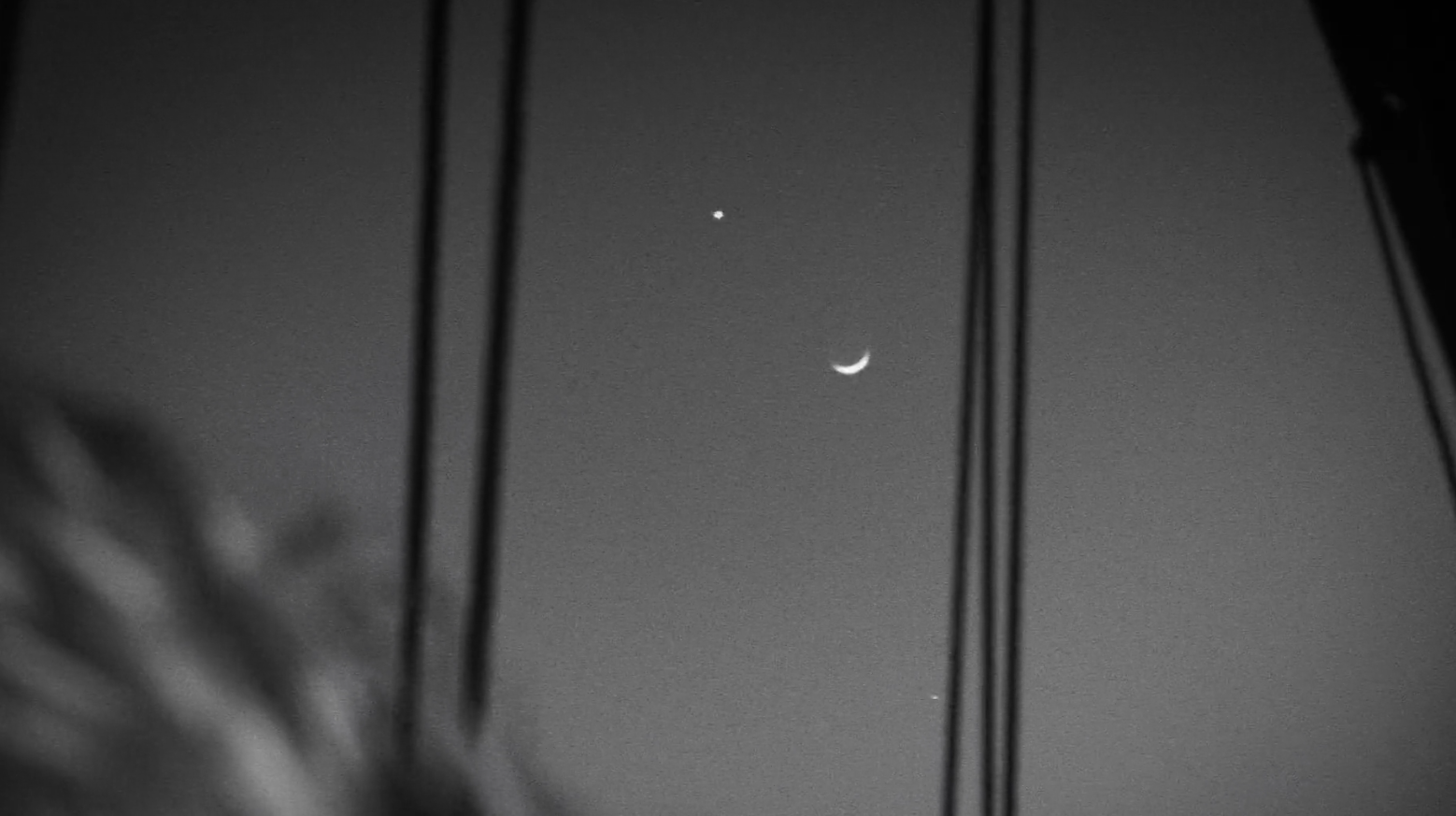
Here's a frame from a video. Same production as the "royal star" frame I posted yesterday. This was probably filmed in the second half of 2016. The cameraman was chatting with the crew in twilight aboard this sailboat. The attractive sight of the slim crescent Moon and two bright planets caught his attention so he briefly panned toward the bow. And look! He caught a lunar. The scale here is barely useful, but if you can identify the bright planet above and the somewhat fainter planet below, you can use this as a low-quality lunar observation.
Assume summer 2016 as a starting point. We can take the longitude as a given: 145°E, to the nearest degree. So what is the date and UT?!
This requires no "lunarian" skills, no lunars math beyond rough estimation of longitude. Grab any sky simulation app, like Stellarium, and explore until you find this sky!
Frank Reed
PS: I have tagged this is a lunar "by accident" in the video production. Even more remarkable "by accident", I came across this yesterday during lunch break of my "Lunars & Longitude" workshop. It was the last thing I was expecting: a lunar jumping out at me for a fraction of a second while I was having lunch.